

Continuous testing that keeps up with your application
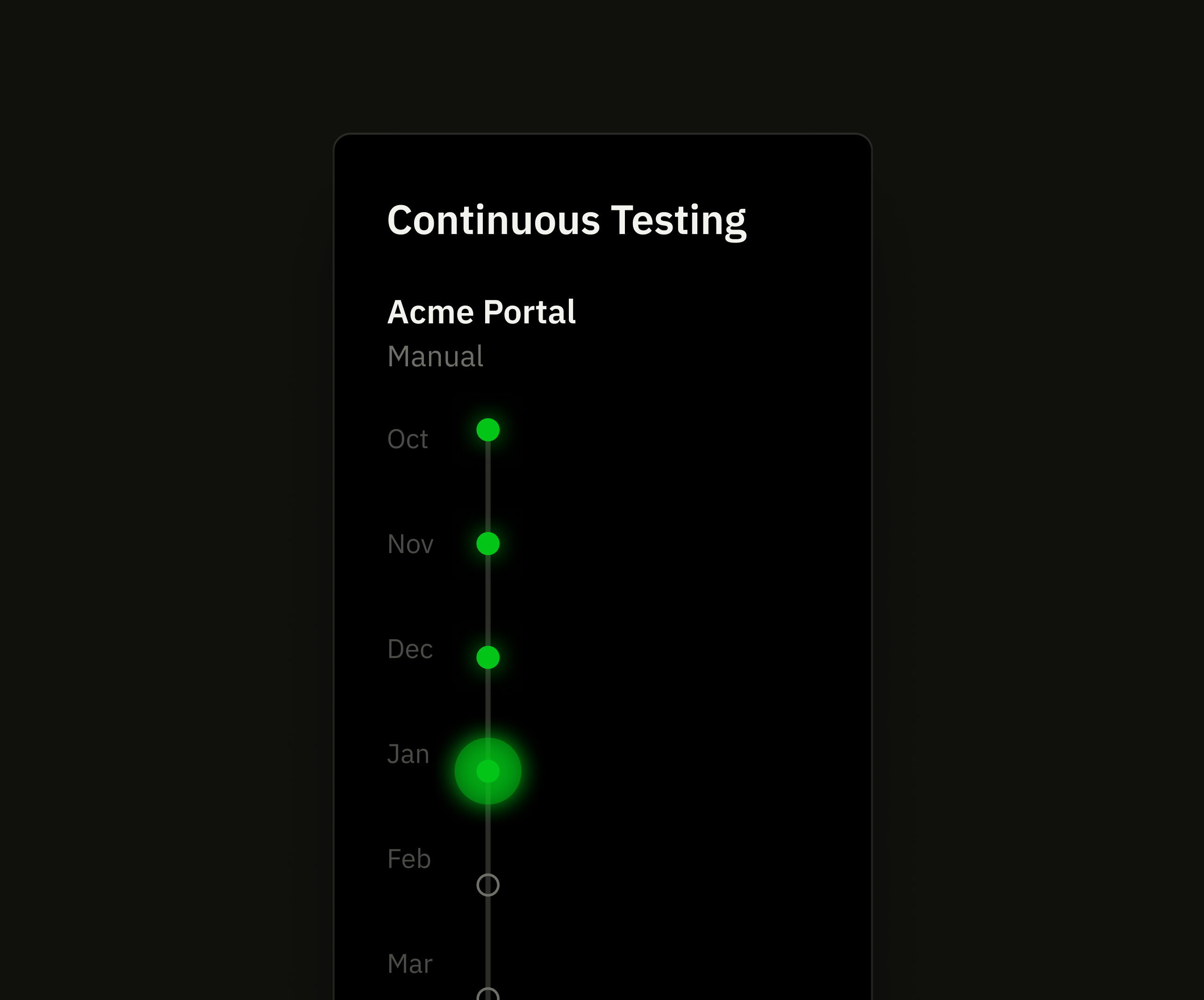
Sybil tests on every pull request, or on a cadence you set, validating and exploiting real vulnerabilities.
No manual kickoff. No waiting for the next pentest.
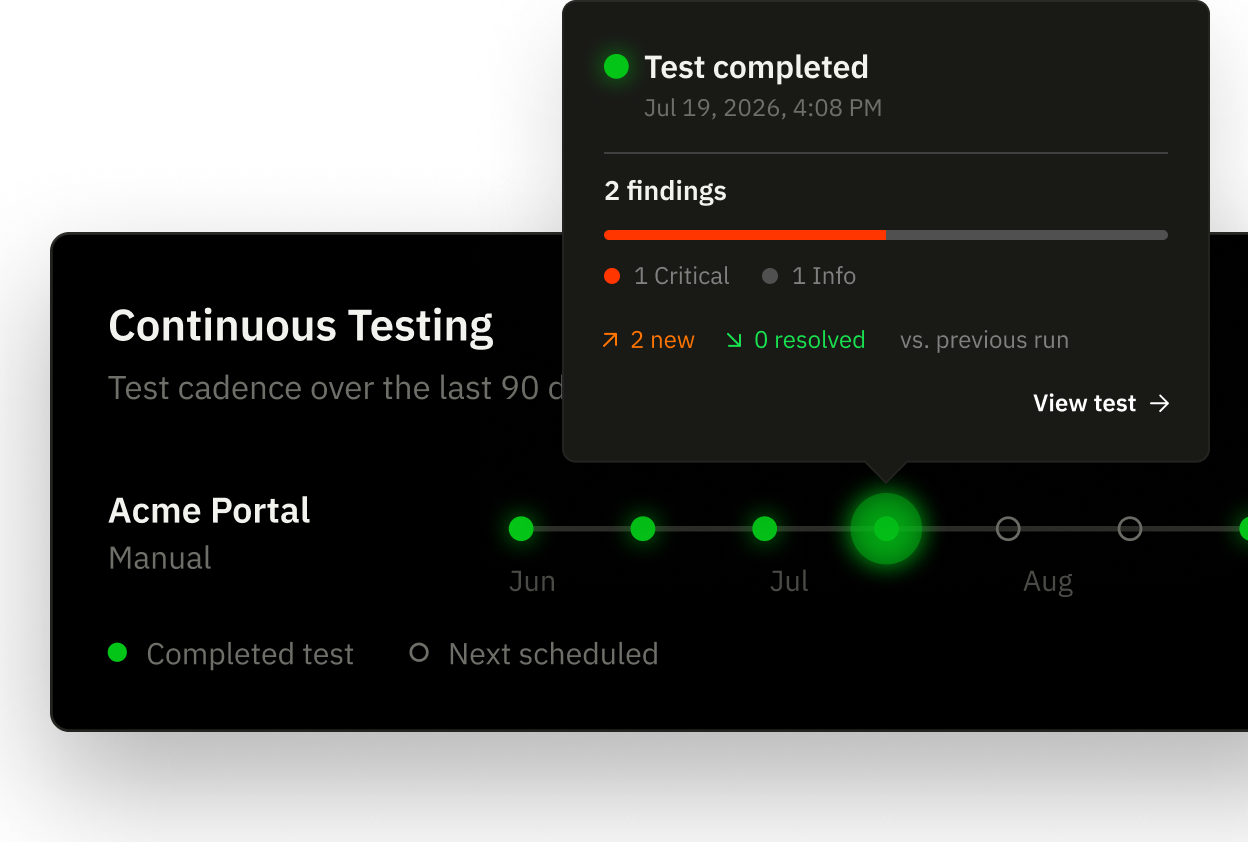




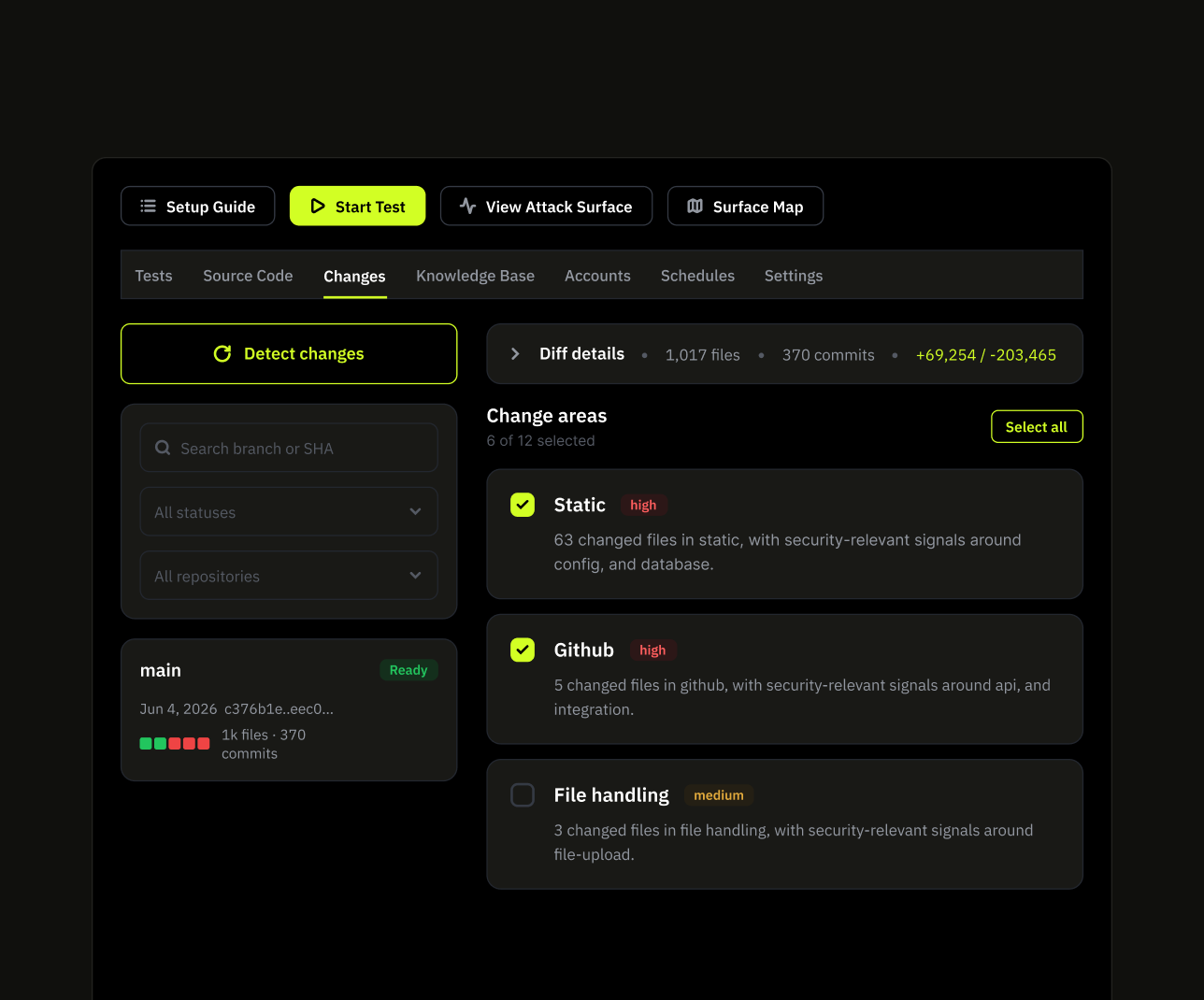
Additionally, Sybil can test against changes it detects on the attack surface, so that even without code access, an evolving application is tested accordingly

Frequently Asked Questions
Autonomous penetration testing is authorized offensive security testing performed by AI agents that continuously reason across live applications and infrastructure: discovering attack surface, planning and executing safe exploit attempts, adapting based on system behavior, validating real impact, and producing evidence-backed remediation guidance, without requiring a human in the loop.
It authenticates to the application, maps the attack surface, attacks by chaining weaknesses into exploit paths, and validates exploitability before reporting.
No. A scanner matches signatures and flags potential issues. Autonomous penetration testing reasons about your application and proves exploitability by chaining real attacks. Sybil reports only what it has confirmed is exploitable.
Yes. Sybil covers privilege escalation, multi-tenant isolation, and business-logic flaws that scanners miss, with capabilities continuing to expand for web applications.
Accuracy depends on validation. Sybil runs every finding through a multi-agent pipeline that drives false positives toward zero.
Yes. RunSybil customers have satisfied SOC 2 Type II and ISO 27001 audits using Sybil's output, which ships pre-formatted with CVSS 3.1 scores and CWE IDs.
No. Sybil is black-box by default; credentials and source code are both optional. Providing credentials enables deeper coverage, the same detail as a traditional third-party pentest. Source code is optional and enables deeper white-box coverage and code-level remediation.
RunSybil gives you a portfolio-level view of testing activity: