

Rethink Application Security
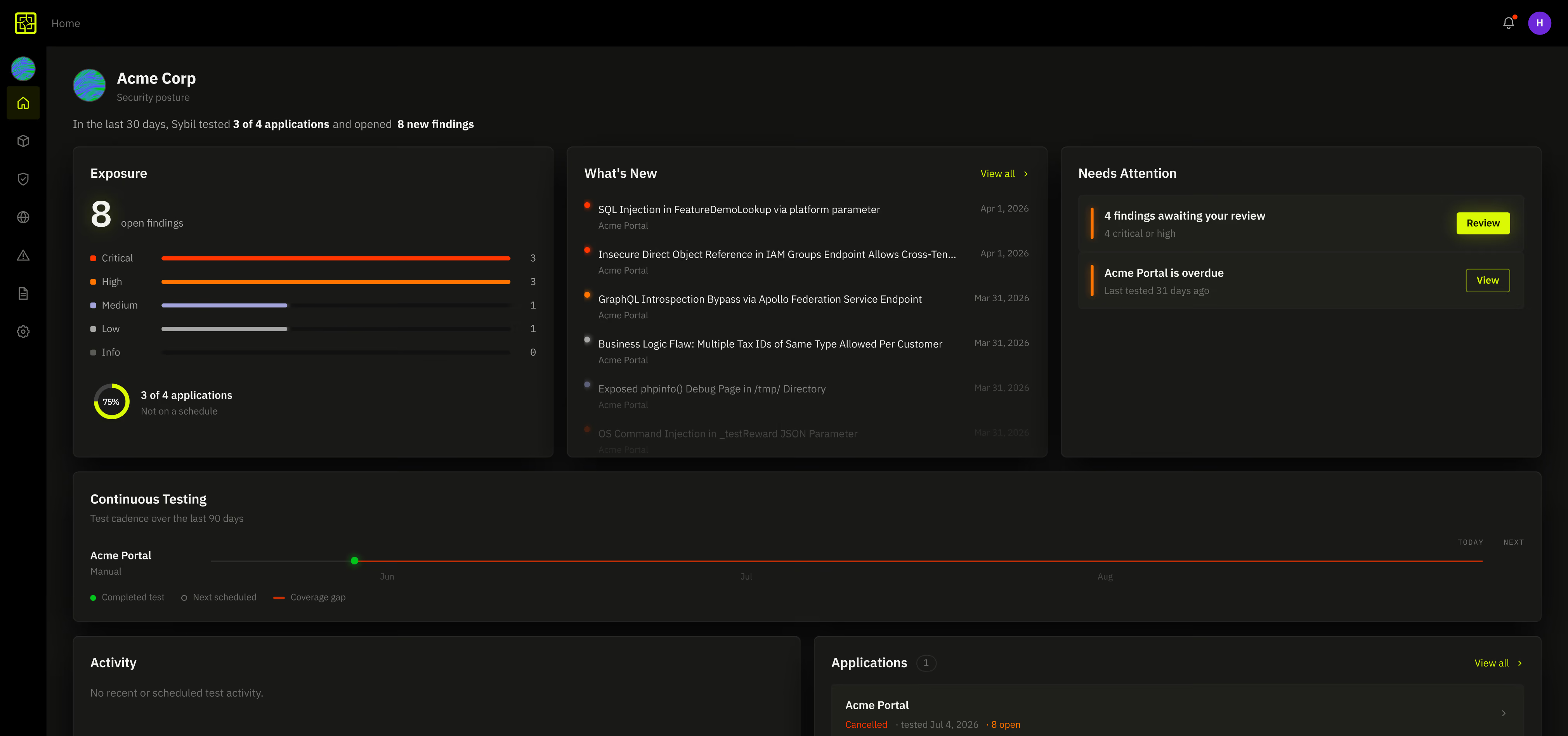
Why security can't keep up





“Sybil has been great. Super helpful. Quick. Only positive things.”
Choose your testing approach
Black-box
Grey-box
White-box • Opt-in
Point Sybil at a live URL and stand back
Authenticate
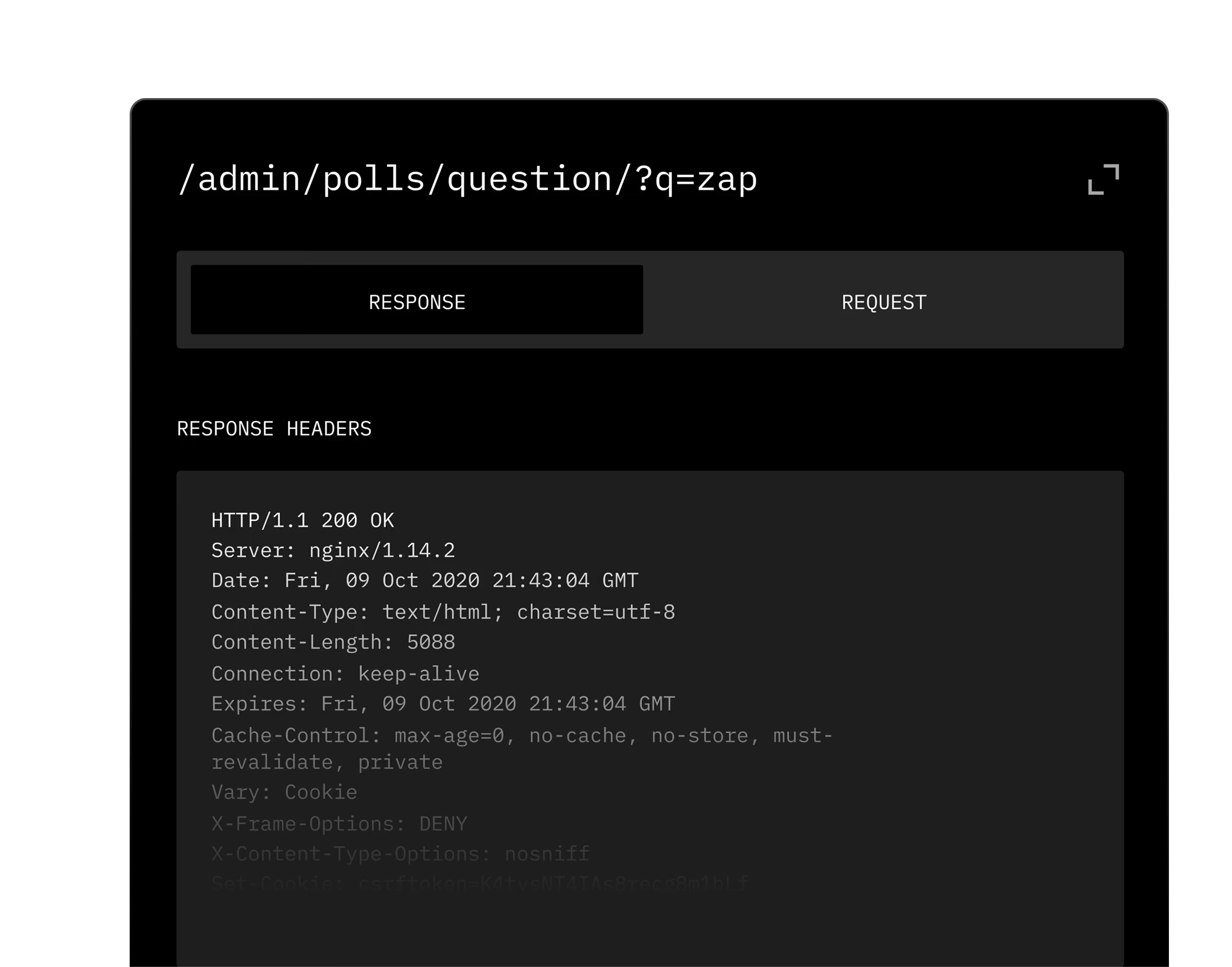

02
Map
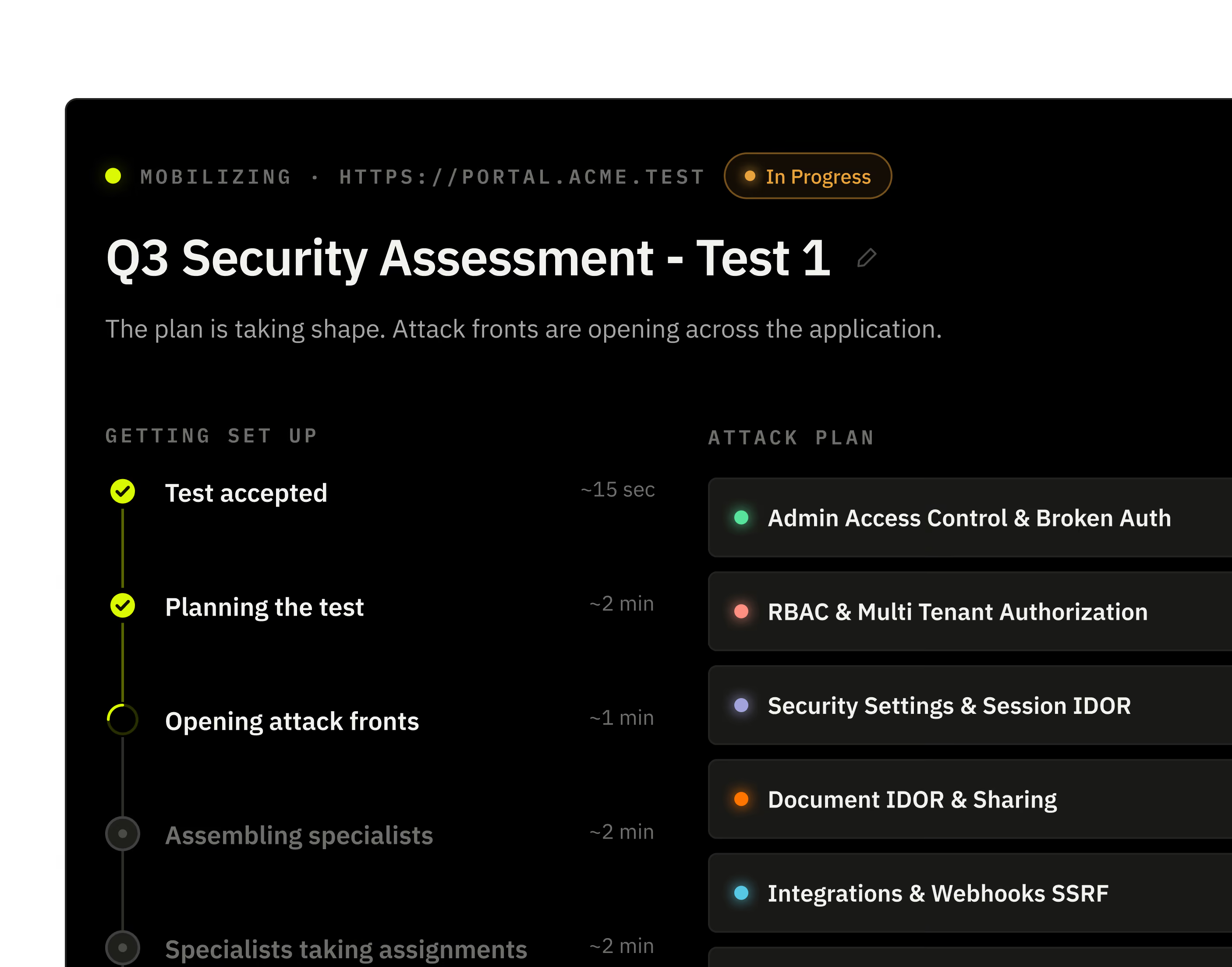
Before testing starts, Sybil builds a model of your application: purpose, tech stack, and full attack surface, authenticated and unauthenticated. You can see this map yourself, so your team knows exactly what's exposed and what's been tested.
/api/v2/sitemap?scope=full
Response
Request
Response headers
HTTP/1.1 200 OK Server: nginx/1.14.2 Date: Fri, 09 Oct 2020 21:44:10 GMT Content-Type: application/json Content-Length: 18244 Connection: keep-alive X-Endpoints-Discovered: 312 X-Roles-Mapped: 6 Cache-Control: no-store Vary: Cookie
03
Attack
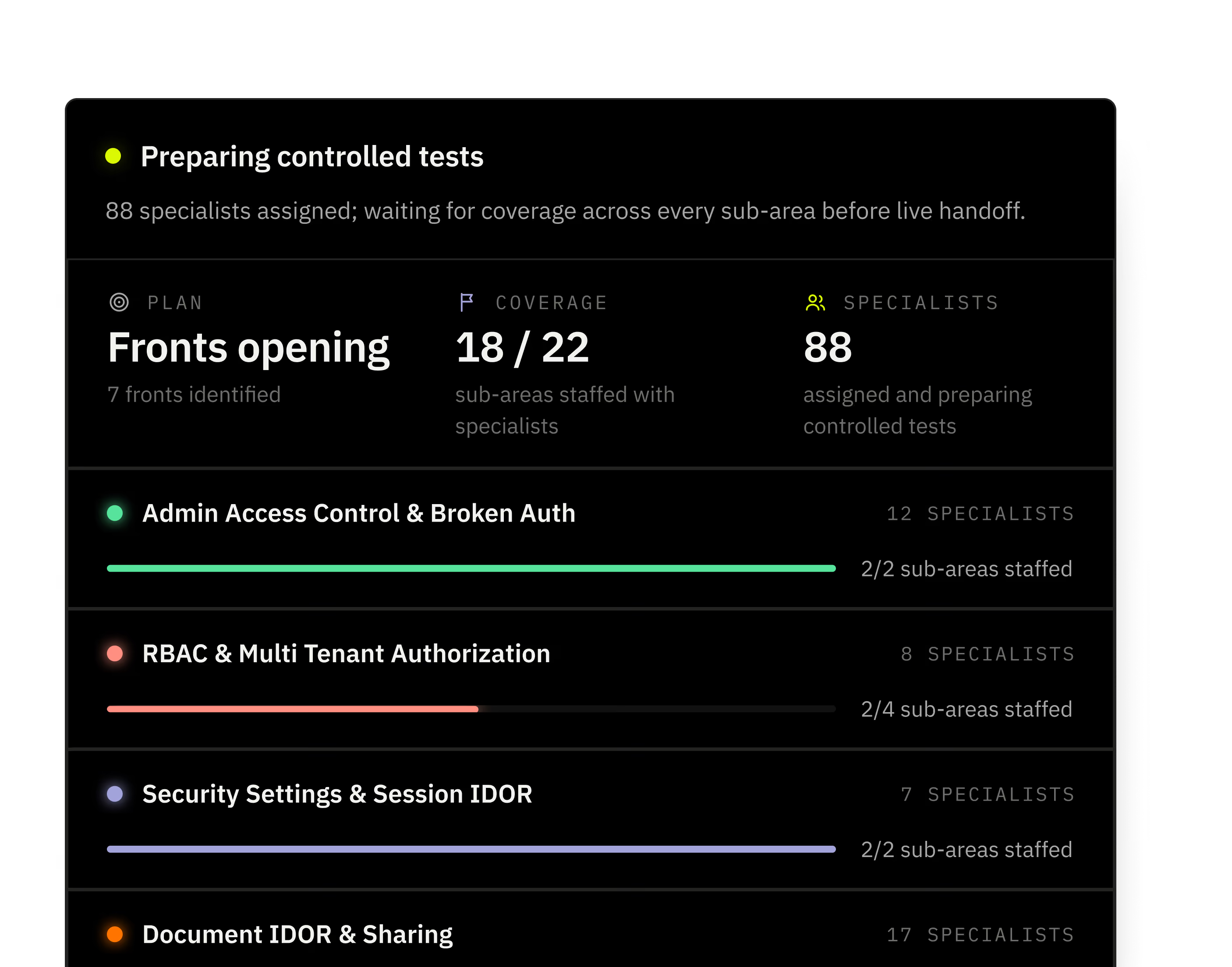
A hierarchy of specialized agents tests hypotheses across your applications, each owning a domain like auth, business logic, or injection. The edge is chaining: combining findings into real exploit paths the way a human attacker would.
/checkout/cart/?id=1337' OR '1'='1
Response
Request
Response headers
HTTP/1.1 500 Internal Server Error Server: nginx/1.14.2 Date: Fri, 09 Oct 2020 21:46:52 GMT Content-Type: text/html; charset=utf-8 Content-Length: 2114 X-Powered-By: Express X-SQL-Error: near "OR": syntax error Connection: keep-alive
04
Validate
Every finding passes a multi-stage validation pipeline: deduplication, reproducibility, false-positive triage. Nothing surfaces until it's reproduced independently.
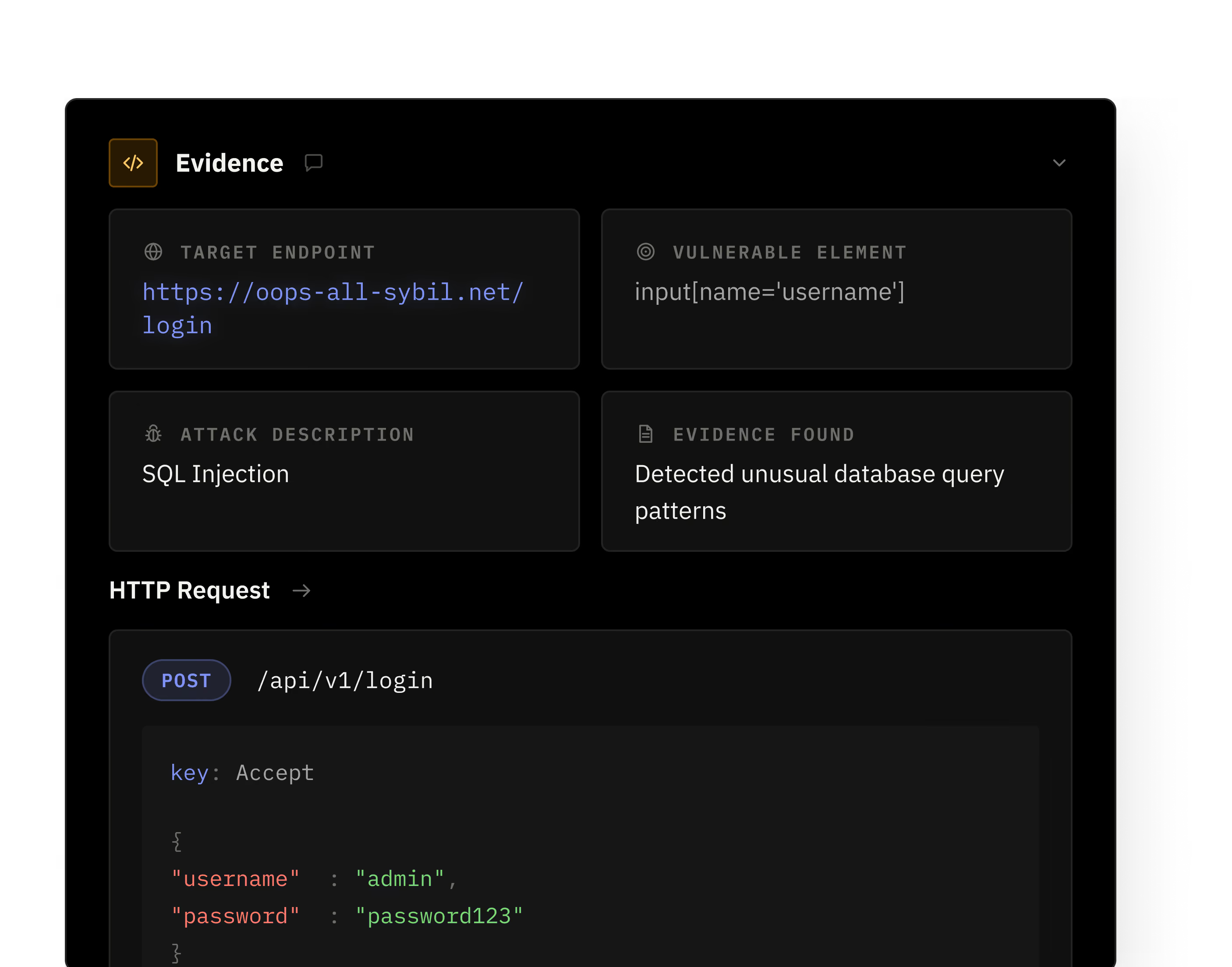
/api/v1/findings/4471/validate
Response
Request
Response headers
HTTP/1.1 200 OK Server: nginx/1.14.2 Date: Fri, 09 Oct 2020 21:52:03 GMT Content-Type: application/json Content-Length: 866 X-Finding-Status: confirmed X-False-Positive: false Cache-Control: no-store
05
Remediate
Each finding includes detailed AI-generated remediation recommendations, plus a "Fix with AI" flow that builds a ready-to-run prompt (or CLI command for Codex, Claude Code, or Cursor) pointing your coding assistant at the RunSybil MCP server to pull finding details and auto-remediate locally. Trigger a retest and an automated validator agent re-runs the original attack to confirm the vulnerability is actually fixed and not just returning a different error. Findings and reports track remediation status end-to-end, so you can see open vs. remediated issues across the full engagement.
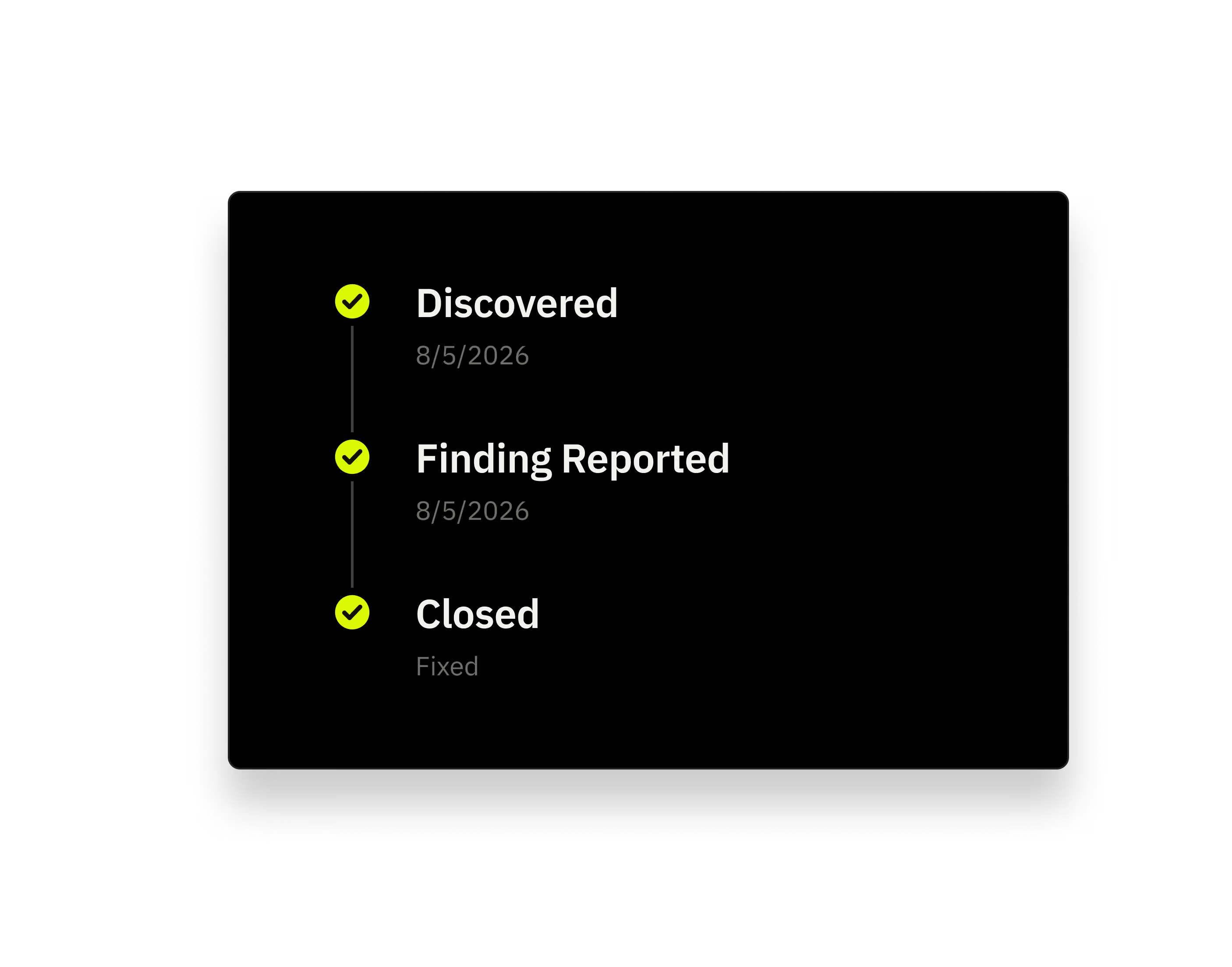
/api/v1/findings/4471/remediate
Response
Request
Response headers
HTTP/1.1 200 OK Server: nginx/1.14.2 Date: Fri, 09 Oct 2020 22:03:41 GMT Content-Type: application/json Content-Length: 512 X-Remediation-Status: patched X-Retest-Result: pass Connection: keep-alive
06
Continuous
After the initial engagement, Sybil tests only what changed, triggered by a PR, a manual run, or a set cadence, informed by everything it already knows about your application. That's what makes ongoing coverage viable at scale, instead of a scanner re-running blindly on a timer.
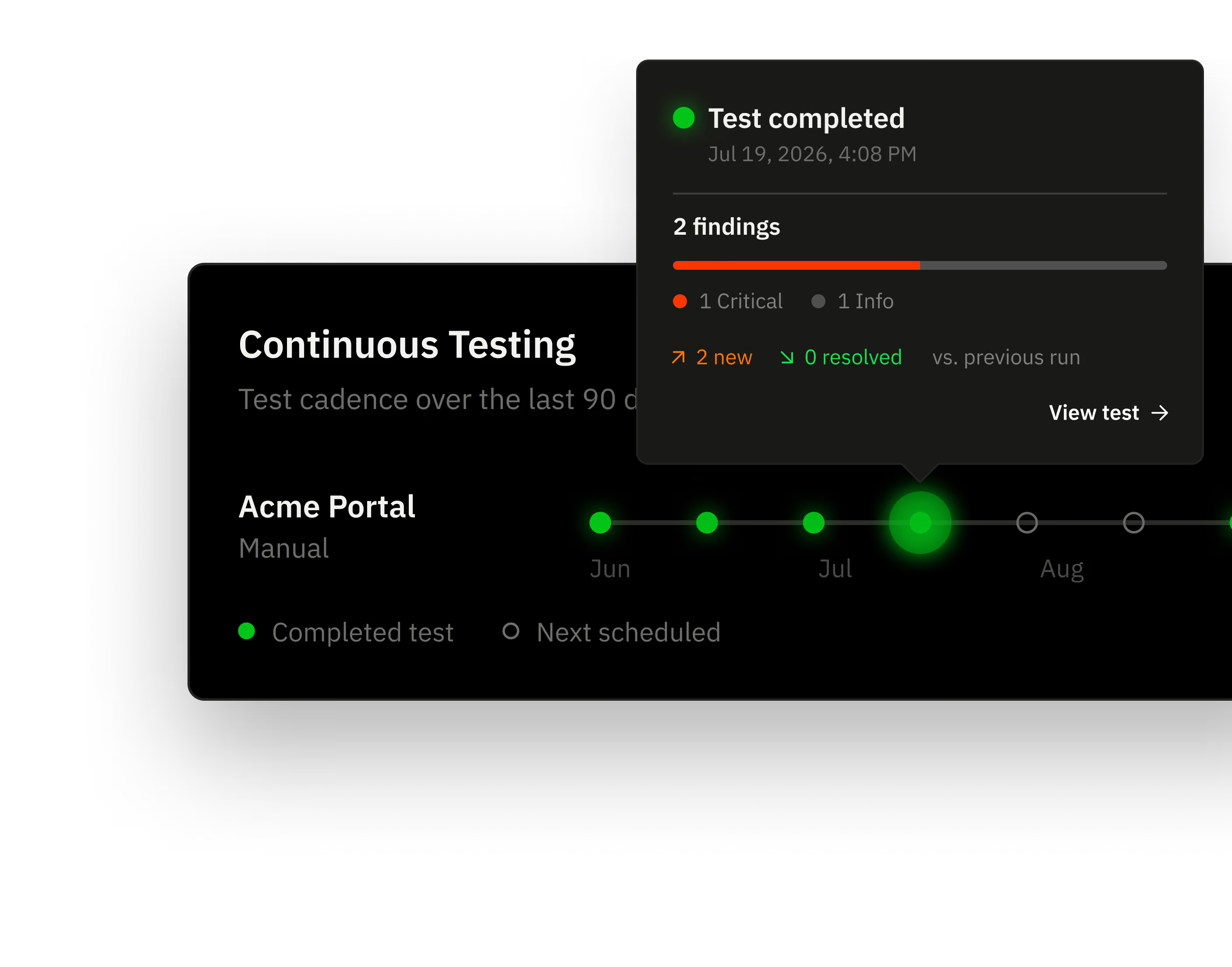
What Sybil finds

Access control

Server-side

Logic

Injection

Novel vulnerabilities

Client-side
What's in every finding
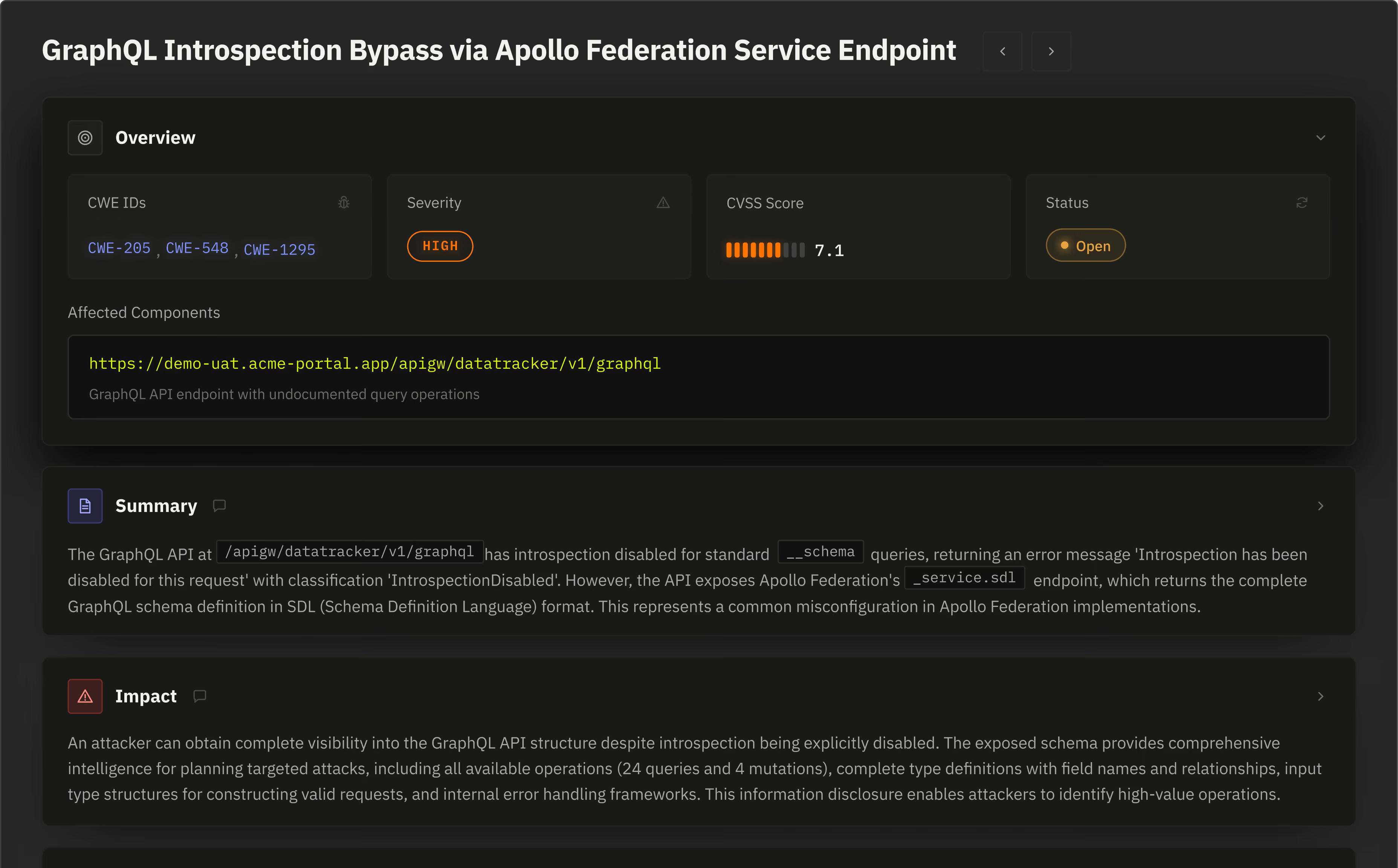

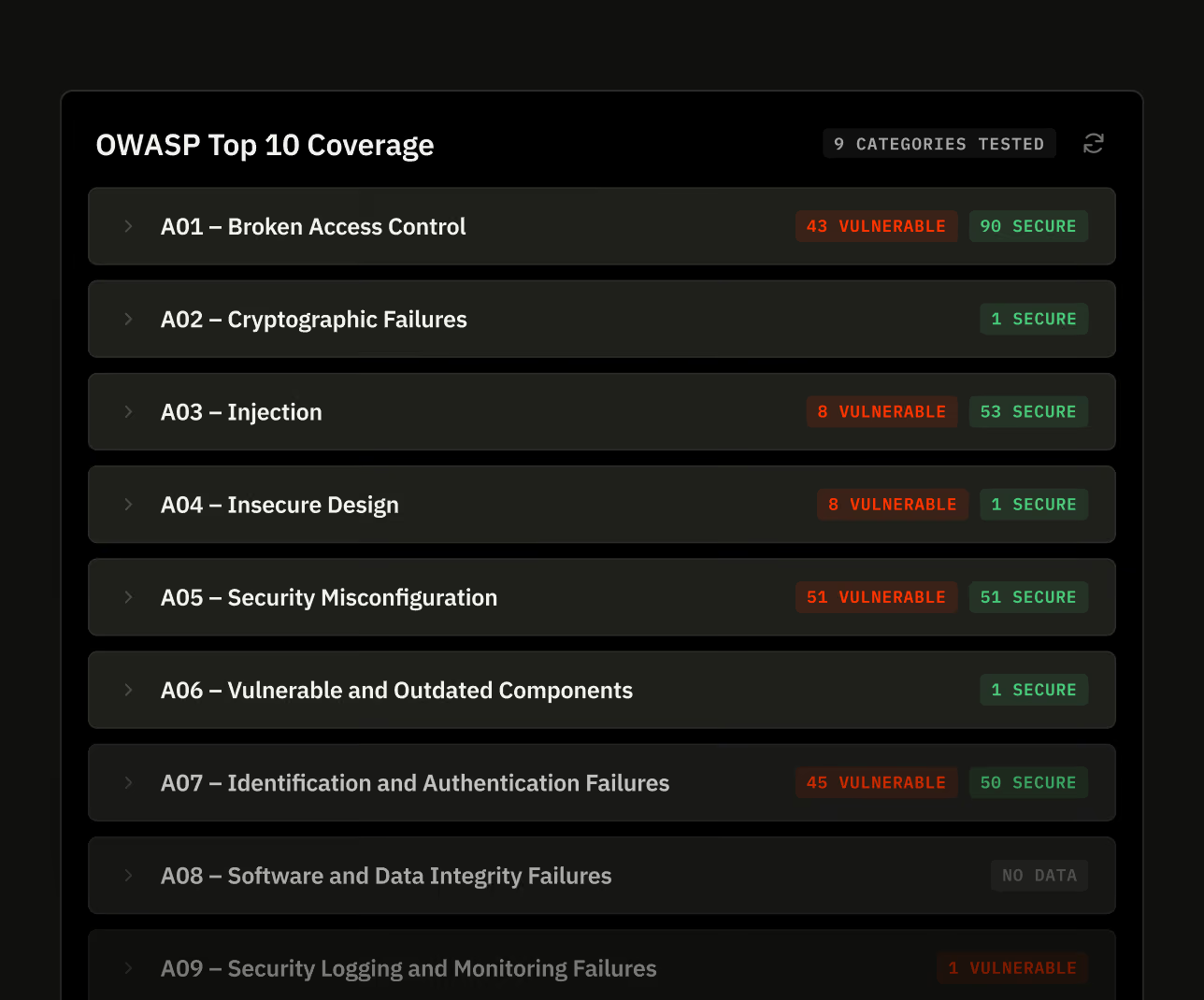
Coverage you can verify
An AI scanner can't tell you what it didn't test. Sybil can. Ask "did you try this?" at the finding level, and get an answer.
Integrates with GitHub and GitLab for Continuous Testing
Trusted by high velocity teams

Common questions.
Sybil tests your web and API attack surface — authenticated functionality, access control, business logic, injection, multi-tenant isolation, and novel bugs — mapped as connected exploit chains rather than isolated findings.
Every finding passes a multi-agent validation pipeline: a critique pass, a reproducibility check on a clean session, a dedicated false-positive triage agent, and duplicate detection. Anything that doesn't survive every stage gets dropped.
Engagements start the same day you onboard. Smaller applications complete same-day; large, complex applications take up to 24 hours. Retests complete in under an hour, with no scheduling required.
Yes. RunSybil customers have satisfied SOC 2 Type II and ISO 27001 audits using Sybil's output, which ships pre-formatted with CVSS 3.1 scores and CWE IDs.