Solutions

Autonomous Penetration Testing

You develop with autonomous tools. You still pentest with humans.
That's not a fair fight. Sybil runs autonomous penetration testing engagements — black box or white box, your call — with the same kind of intelligence, at the same pace, that's already shipping your code. Every finding is independently reproduced before you ever see it, ships with a CWE ID, a CVSS score, and remediation precise enough to hand an autonomous coding assistant, with retesting available once the fix lands.
Code snippet from api/routes/invoices.py showing a change in access control: a line checking if current_user.id equals invoice.owner_id is removed, replaced by a check if current_user.org_id equals invoice.org_id returning serialized invoice, else abort 403. The change extends ownership check from user-level to org-level access. Notes explain this broadens authorization to all org members, tested against cross-org and cross-role access, confirms a low-privilege user can read other org data, and includes a scoped query and regression test ready to merge.
CHANGED FILE TREE
★ api/routes/invoices.py
api/routes/billing.py
models/invoice.py
tests/test_invoices.py
api/routes/auth.py
api/routes/invoices.py · PR #4128
✓ Reviewed by Sybil
87
- if current_user.org_id == invoice.org_id:
88
+ return metadata(invoice)
89
abort(403)
YOU CHANGED THIS
Ownership check widened from user-level to org-level access.
WHY IT MATTERS
Any member of an org can now reach every invoice in it: a new authorization boundary, not just a bigger blast radius.
WE TESTED
Cross-org and cross-role access paths against this endpoint and its three downstream callers.
HERE'S WHAT WAS REAL
Confirmed: a low-privilege user in Org A can enumerate invoice IDs and read Org B's data via a shared billing proxy.
HERE'S THE FIX
PR opened: scoped query + regression test attached, ready to merge.
Trusted by security & engineering teams
Notion logoCursor logoThinking Machines logoCarta logoBaseten logo
29
min
average breakout time in 2025: how long it takes a real attacker to go from first access to moving deeper into your network.
(CrowdStrike, 2026 Global Threat Report)
89%
year-over-year increase in attacks from autonomous adversaries. The other side of this industry already went agentic.
(CrowdStrike, 2026 Global Threat Report)
67
days
median time it actually takes to fix a pentest finding once it's reported. The bottleneck was never how fast the test runs — it's what happens after.
(BrightDefense, Penetration Testing Statistics, 2026)
It runs the engagement, not a checklist.
Every Sybil engagement moves through the same pipeline, whether it's a one-time pentest or ongoing coverage — access confirmed, surface mapped, techniques chained, findings independently reproduced, fixes shipped back.
01
Access & recon
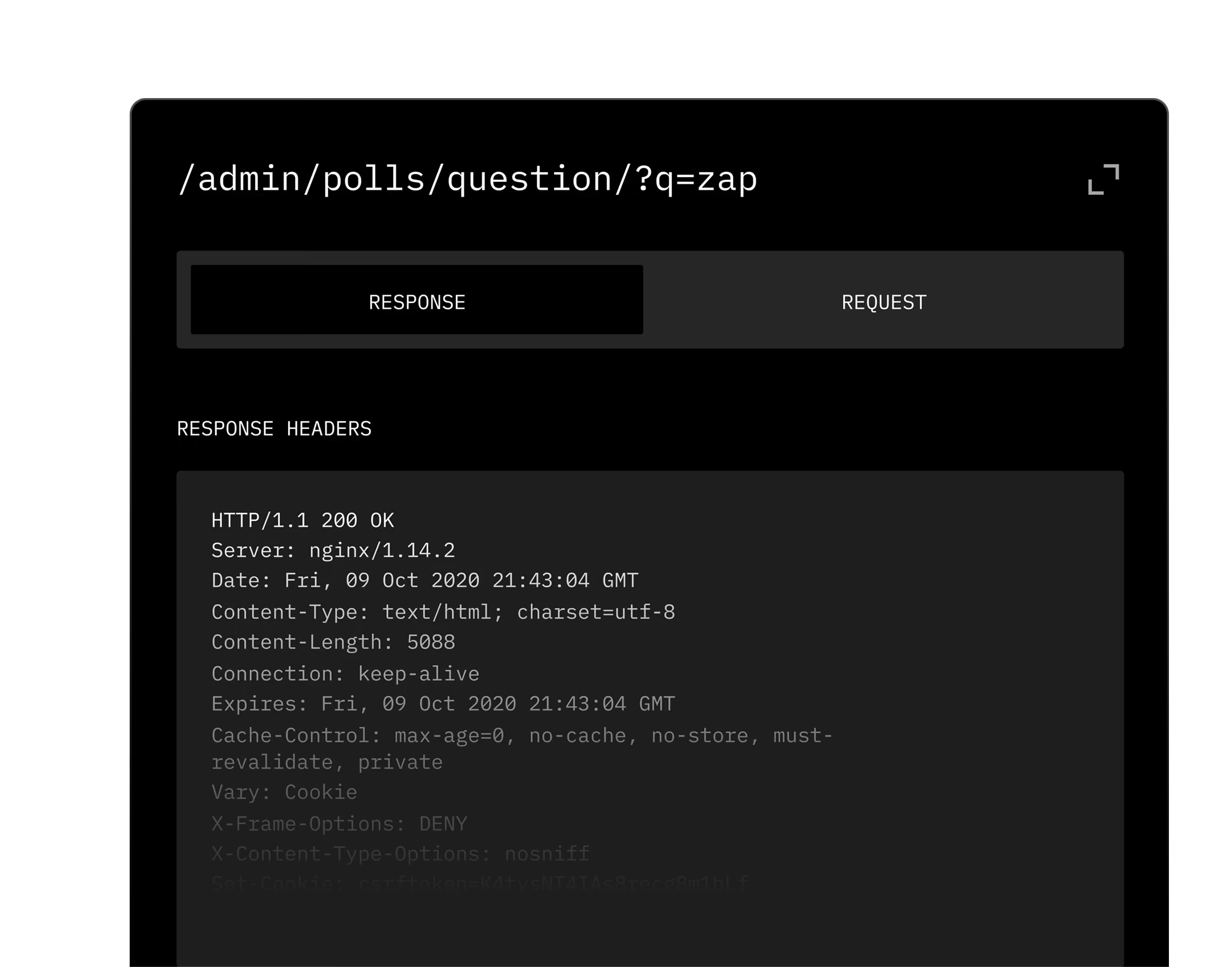
Credentials and scope are confirmed, then every reachable endpoint, page, and API inside that scope gets mapped.
Screenshot showing a web server response with HTTP 200 OK status and related headers in a black interface.
/admin/polls/question/?q=zap
Expand icon
Response
Request
Response headers
HTTP/1.1 200 OK Server: nginx/1.14.2 Date: Fri, 09 Oct 2020 21:43:04 GMT Content-Type: text/html; charset=utf-8 Content-Length: 5088 Connection: keep-alive Expires: Fri, 09 Oct 2020 21:43:04 GMT Cache-Control: max-age=0, no-cache, no-store, must-revalidate, private Vary: Cookie X-Frame-Options: DENY X-Content-Type-Options: nosniff Set-Cookie: csrftoken=K4tvsNT4IAs8recg8m1bLf

02

Plan & execute

Testing is prioritized by risk, then real attack techniques get run against the target — not a fixed checklist.
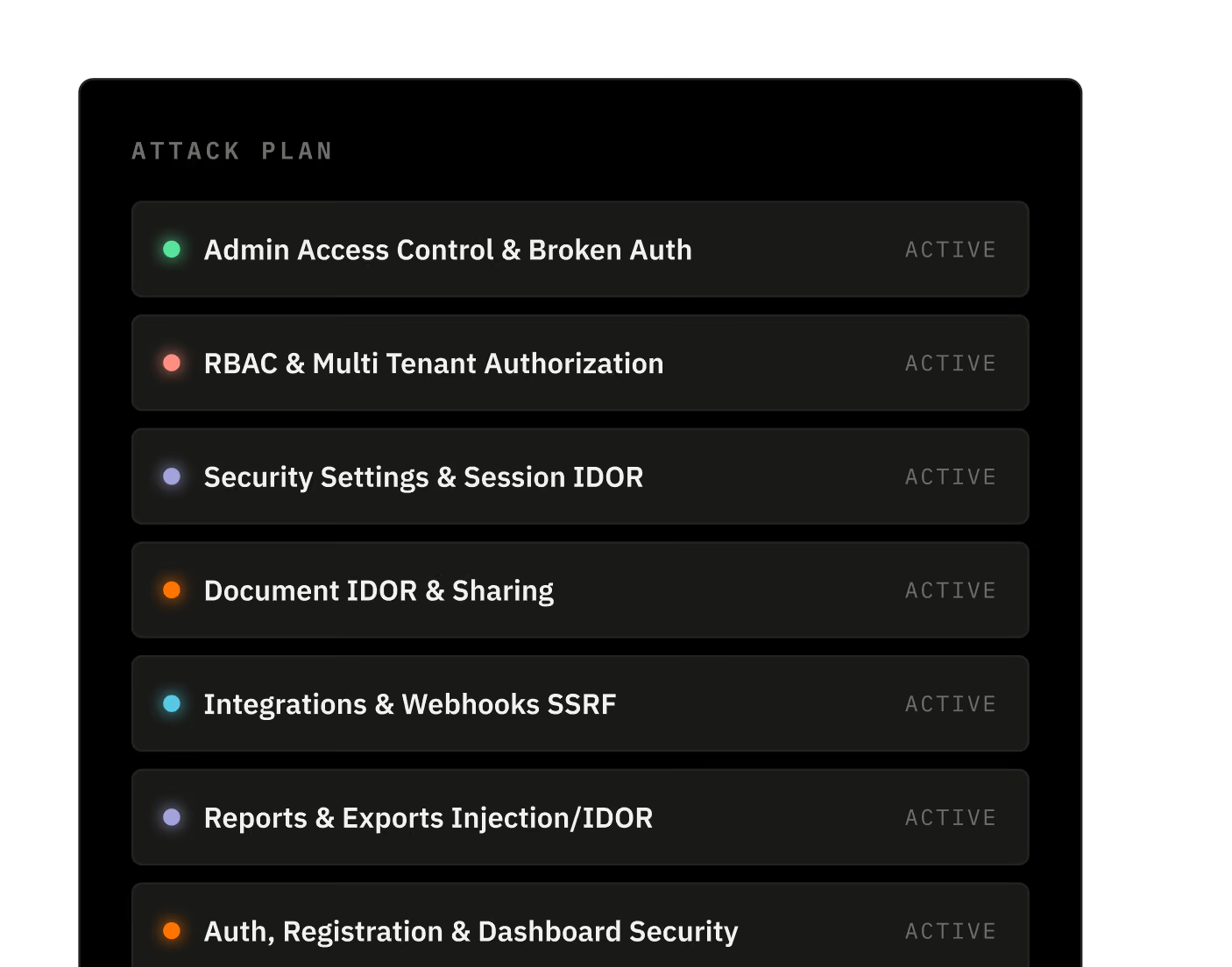
Attack Plan list showing categories like Admin Access Control & Broken Auth, RBAC & Multi Tenant Authorization, all marked Active.

03

Identify

Anything that looks like a real weakness gets flagged as a candidate finding.
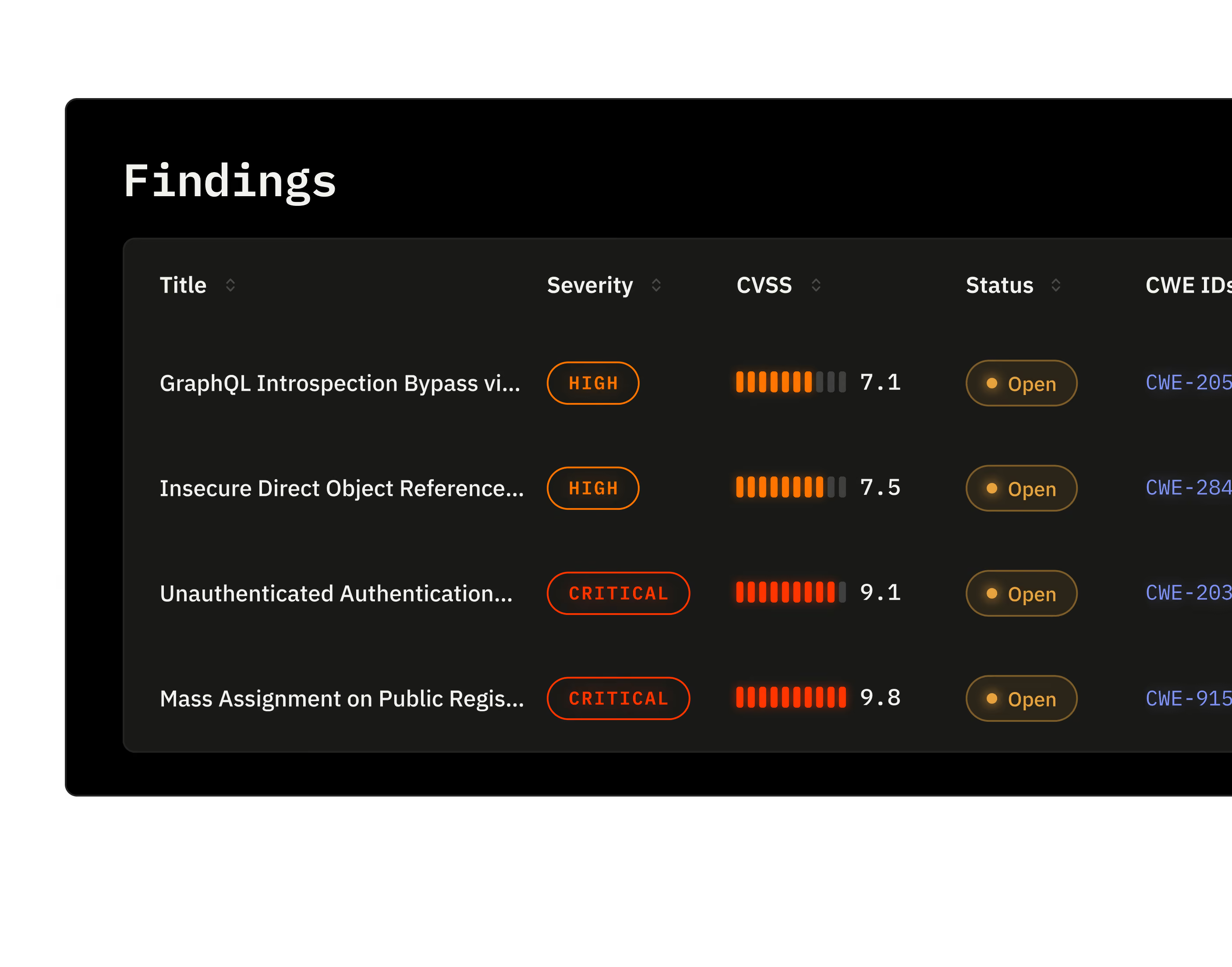
Findings table listing vulnerabilities with severity, CVSS score, status, and test type.

04

Validate & escalate

A separate pass independently reproduces it into a canonical finding, then chains it to see how far a real attacker could actually get.
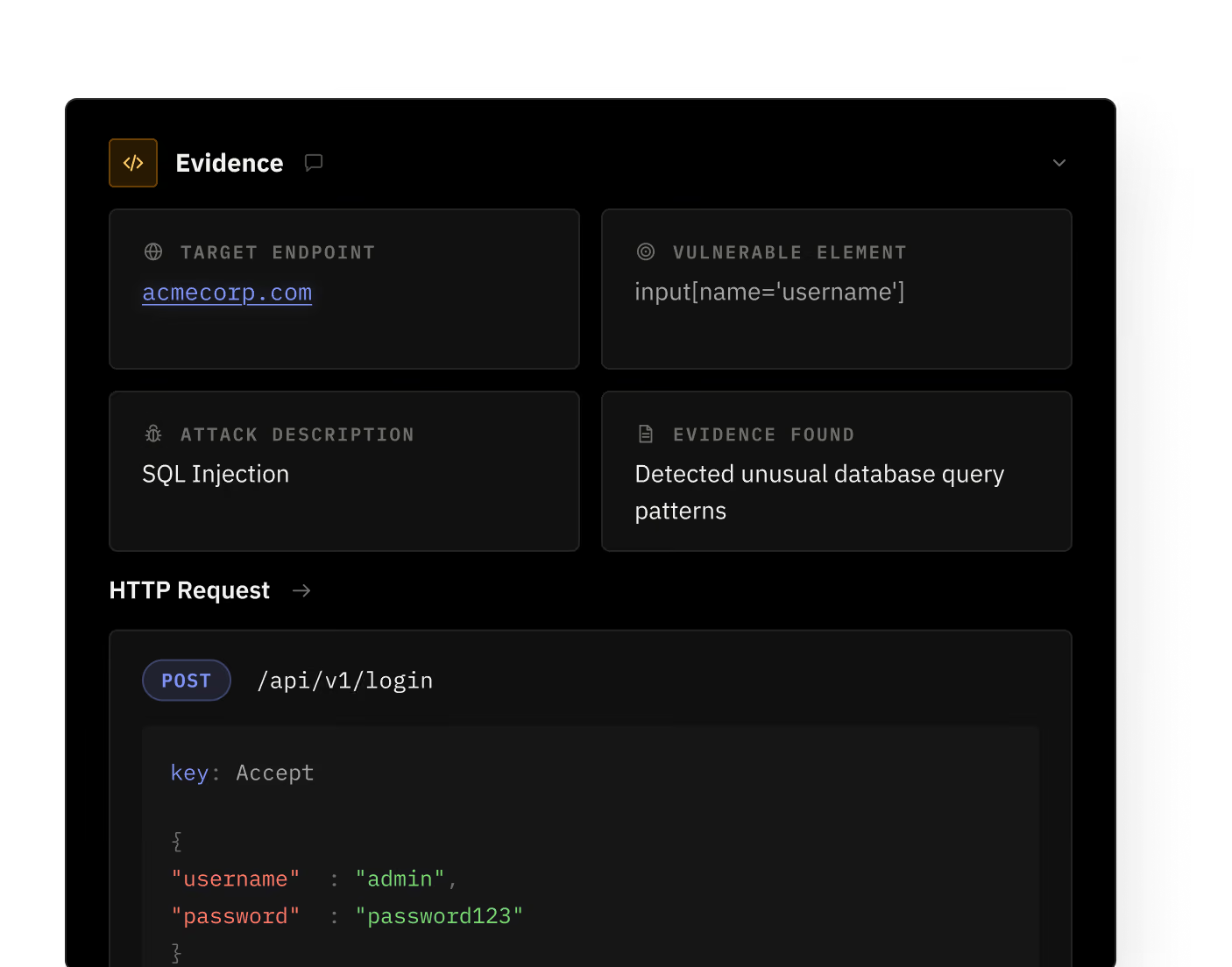
Security report showing SQL injection attack evidence on login endpoint with unusual database query patterns.

/api/v1/findings/4471/validate

Expand icon

Response

Request

Response headers

HTTP/1.1 200 OK Server: nginx/1.14.2 Date: Fri, 09 Oct 2020 21:52:03 GMT Content-Type: application/json Content-Length: 866 X-Finding-Status: confirmed X-False-Positive: false Cache-Control: no-store

05

Remediate & retest

Fix guidance ships precise enough to hand an autonomous coding assistant, with retesting available to confirm it holds.
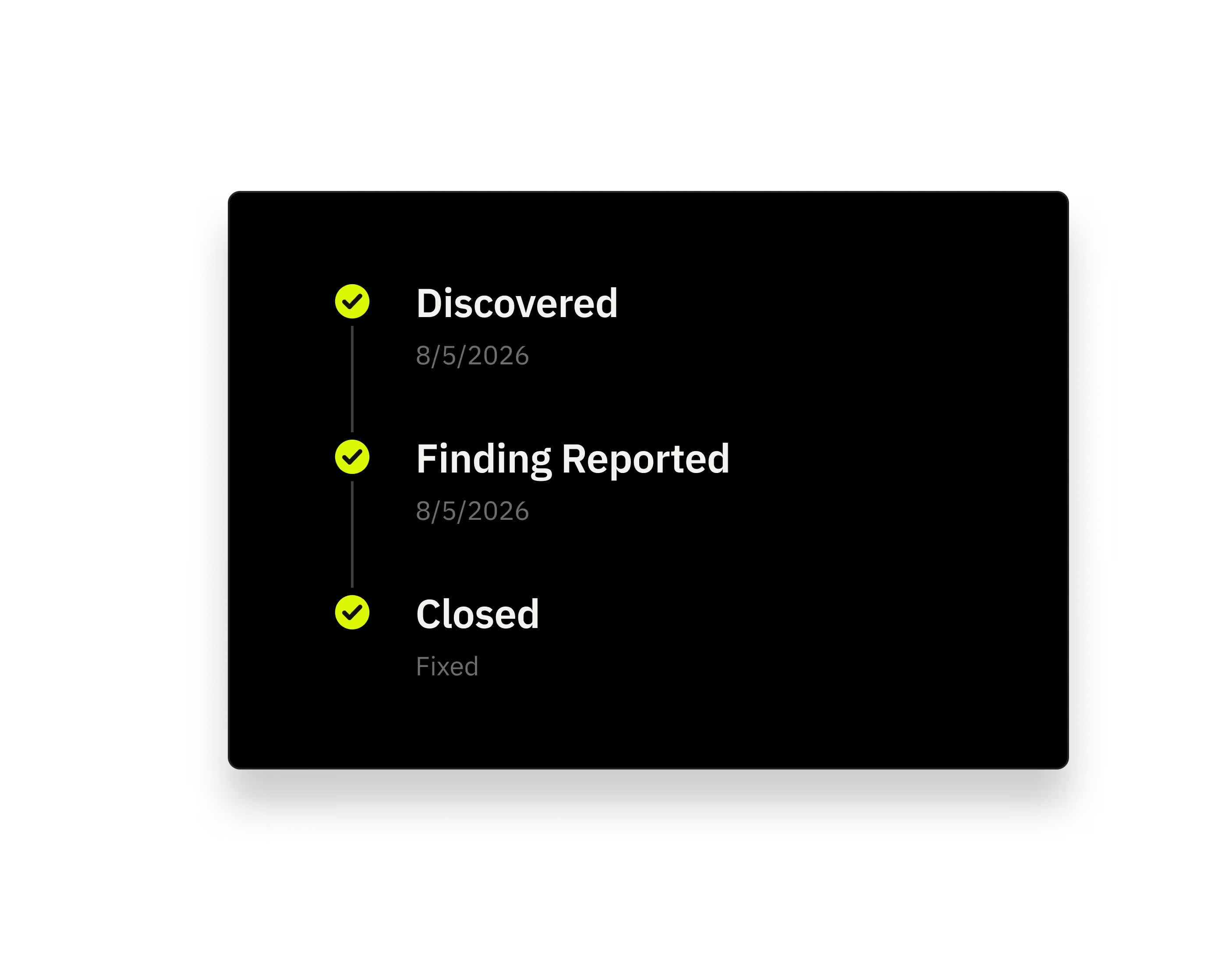
Timeline showing three completed steps: Discovered, Finding Reported on 8/5/2026, and Closed (Fixed).

/api/v1/findings/4471/remediate

Expand icon

Response

Request

Response headers

HTTP/1.1 200 OK Server: nginx/1.14.2 Date: Fri, 09 Oct 2020 22:03:41 GMT Content-Type: application/json Content-Length: 512 X-Remediation-Status: patched X-Retest-Result: pass Connection: keep-alive

also available: White Box
White box: go deeper by exposing the agents to the source.
Black box proves what an outsider can reach. Some questions live deeper than the perimeter — broken authorization logic, internal APIs, role boundaries that only show up once you can read the code. That's white box.
Decorative background texture
Option 02
White Box: "The architect"
Starts from:
Full source access, credentials across roles, and infra/config — the blueprints, not just the walls.
Proves:
The deep, structural issues that only surface once you can read the code — broken authorization logic, internal API paths, role boundaries.
Best for:
Authorization logic, internal APIs, and anything where "did we build this right" matters more than "can someone find the front door."
Need something in between? We also run Gray Box engagements — standard, logged-in user access — to test how far a normal account, or one that's been stolen, could actually get. Run black box first, then white box to chase down what it couldn't see from outside — a white box pass often confirms exactly what a black box finding was pointing at. Either way, findings feed the same coverage picture, and either engagement can convert into ongoing, continuous coverage once you're ready to stop scoping this once a year.
Code example callout — white box engagement, flagged by Sybil
api/routes/invoices.py
def get_invoice(invoice_id):     if current_user.id == invoice.owner_id:     if current_user.org_id == invoice.org_id:         return serialize(invoice)         abort(403)
What we found:
The ownership check was widened from user-level to org-level in a recent change. Any member of an org can now reach every invoice in it — a new authorization boundary, not just a bigger blast radius.
How white box confirmed it:
Reading the code pointed straight at the check; testing every role and org combination against it confirmed the gap holds in practice, not just on the page.
What was real — canonical finding:
Confirmed: a low-privilege account in Org A enumerates invoice IDs and reads Org B's data through a shared billing proxy. — CWE-639 · CVSS 8.1 HIGH
The fix:
Remediation shipped precise enough to hand to an autonomous coding assistant: scoped query + regression test. Retest available to confirm it holds once merged.
What Sybil actually tests
Real applications, authenticated on day one.
Supported targets
Web apps (SPA / MPA) · REST APIs (OpenAPI ingestion) · GraphQL · gRPC · WebSockets · React / Angular / Vue · Mobile backends (iOS / Android API layer) · Internally exposed applications
Authenticated, day one
Username / password · Session cookies & custom headers · 2FA (TOTP, email codes, magic links) · SSO (SAML, OAuth2, OIDC) · RBAC across multiple roles · Multi-tenant applications

Autonomous Pentesting vs. Traditional, PTaaS & BAS

How autonomous penetration testing compares to a human-led engagement, pentest-as-a-service, and breach & attack simulation. PTaaS is the closest human-delivered adjacent category; BAS is the closest automated adjacent category.

SYBIL
Autonomous Pentesting
HUMAN-LED
Traditional Pentesting
PENTEST AS A SERVICE
PTaaS
BREACH & ATTACK SIMULATION
BAS
Time to kick off
Fast
No scheduling bottleneck. Starts on demand
Slow
Scoping calls, tester availability. Often weeks out
Fast
Platform-scheduled, usually within a day or two, subject to tester availability
Fast
Automated, but limited to a fixed technique library
Retesting
On demand or continuous
Results in under an hour, as often as you need
Re-book required
Usually weeks later, added cost
On demand
Included in engagement, typically about a week turnaround
Continuous
Only re-checks known techniques
What it does
Full pentest methodology end to end
Recon, exploitation, chaining, validation
Manual exploration
Chains exploits, validates real business impact
Human testers via a vetted platform
Often paired with automated scanning for coverage between engagements
Runs known attack techniques
Checks if defenses catch them
Cadence
On your schedule
Point-in-time or continuous. Your timeline, your call
Point-in-time
Dependent on the pentester's schedule
Flexible
Point-in-time, recurring, or continuous access to the platform
Continuous
Automated, fixed schedule
Depth of exploitation
Deep
Same rigor as human methodology
Varies by provider
Deep at high-end firms, shallow at commodity ones
Deep
Human-led; quality depends on the tester pool and contract scope
Shallow
Detection check, not exploit chains
False positives
Low
Findings validated before reporting
Low
Human validates every finding
Low
Human-validated findings
Higher
Often just "did the control fire"
Compliance fit
SOC 2, etc.
Green checkmark icon
Satisfies requirement
Faster. Fits a compliance deadline
Green checkmark icon
Satisfies requirement
Turnaround can hold up a deal timeline
Green checkmark icon
Satisfies requirement
Recognized as a pentest by most auditors
Red X icon
Not accepted
Not treated as a pentest substitute by auditors
Best fit
Teams shipping fast, or compliance on a deadline, that still need pentest-grade rigor
Deep manual research, or an auditor requiring a named human-led engagement
Teams that want an always-on relationship with a human tester pool without re-procuring each time
Ongoing control validation against known threats
What this is built on
Four commitments, and one we think the industry should adopt.
1
Depth without the three-week wait
Same rigor as a manual engagement, without weeks lost to scoping calls and tester availability. Engagements start the week you sign.
2
Your access level, your call
Black box, white box, gray box, or a mix — without hiring two vendors or running two separate playbooks.
3
Test and prove, not just scan
Every finding ships with a working exploit and independent reproduction, not a severity score someone else has to argue with.
Gartner’s own definition of Adversarial Exposure Validation
4
The fix ships with the finding
Validated results return as remediation guidance precise enough to hand an autonomous coding assistant — not a PDF appendix nobody re-opens.
5
The one we think should be industry standard
One report, continuously true
Every engagement updates the same coverage picture instead of starting from zero next time, so the report your auditors, your customers, and your board see is still accurate when they read it — not just on the day it was written.
Also satisfies the requirement for
The report your auditor, customer, or insurer needs.
Checkmark icon
SOC 2 Type II
Checkmark icon
Pre-release / annual pentest requirement
Checkmark icon
Customer security questionnaires
Checkmark icon
Cyber insurance renewal
AICPA SOC 2 certification badge
SOC 2 Type II
Sybil itself runs under SOC 2 Type II — independently audited over time, not assessed once.
Shield with padlock icon representing per-customer data isolation
Per-customer isolation
Scope, findings, and credentials are segmented per customer. Nothing crosses organization boundaries.
Amazon Web Services (AWS) logo
Hosted on AWS
Data encrypted both in flight and at rest.
Is this you
Built for teams who need a real test, on their timeline.
Need a pentest report for a customer, auditor, or insurer before a deal closes
Already outnumbered by the engineers actually writing the code
Shipping code faster than a boutique firm can schedule you in
Want an engagement that ends in a merged fix, not a 40-page PDF
Small security team, no bench to hand-test every new endpoint
Considering black box or white box and not sure which answers your actual question
Faq

Frequently Asked Questions

What is autonomous penetration testing?

Autonomous penetration testing is authorized offensive security testing performed by AI agents that continuously reason across live applications and infrastructure: discovering attack surface, planning and executing safe exploit attempts, adapting based on system behavior, validating real impact, and producing evidence-backed remediation guidance, without requiring a human in the loop.

The terms overlap, but "automated" often means a scanner or scripted tool, while "autonomous" means a system that reasons about the specific application, plans multi-step attacks, and validates by exploiting, closer to a human pentester than a scan. With Sybil, pentests can also be scheduled to kick off automatically at a set cadence.

It authenticates to the application, maps the attack surface, attacks by chaining weaknesses into exploit paths, and validates exploitability before reporting.

No. A scanner matches signatures and flags potential issues. Autonomous penetration testing reasons about your application and proves exploitability by chaining real attacks. Sybil reports only what it has confirmed is exploitable.

Yes. Sybil covers privilege escalation, multi-tenant isolation, and business-logic flaws that scanners miss, with capabilities continuing to expand for web applications.

Accuracy depends on validation. Sybil runs every finding through a multi-agent pipeline that drives false positives toward zero.

Yes. RunSybil customers have satisfied SOC 2 Type II and ISO 27001 audits using Sybil's output, which ships pre-formatted with CVSS 3.1 scores and CWE IDs.

No. Sybil is black-box by default; credentials and source code are both optional. Providing credentials enables deeper coverage, the same detail as a traditional third-party pentest. Source code is optional and enables deeper white-box coverage and code-level remediation.

TESTIMONIALS
Trusted  by high velocity  teams

“Sybil has been great. Super helpful. Quick. Only positive things.”

Michael Truell
CEO, Cursor

“We wanted a world-class partner for Turbopuffer’s ongoing pentesting needs, and we couldn’t be happier with our relationship with RunSybil. Quick turnaround, attention to detail, and fun to work with—a partner that will grow with us ❤️🔥”

Simon Eskildsen
CEO, Turbopuffer

"RunSybil was an excellent partner for us. They pressure-tested our systems ahead of a major release and delivered fast, high-quality results at a competitive price on par with top pen-testing firms."

Dana Bost
Senior Technical Program Manager, Notion

“RunSybil’s expertise was instrumental in enhancing our security posture, providing us with critical insights for a confident launch.”

Philip Howes
CTO, Baseten
Pixel-style arrow icon
Let's scope what black box or white box would find in your last release.

Bring us the app. We'll tell you honestly whether black box, white box, or both is the right way to test it — then run it in days, not quarters.