

Continuous Security Testing That Keeps Pace With Your Developers
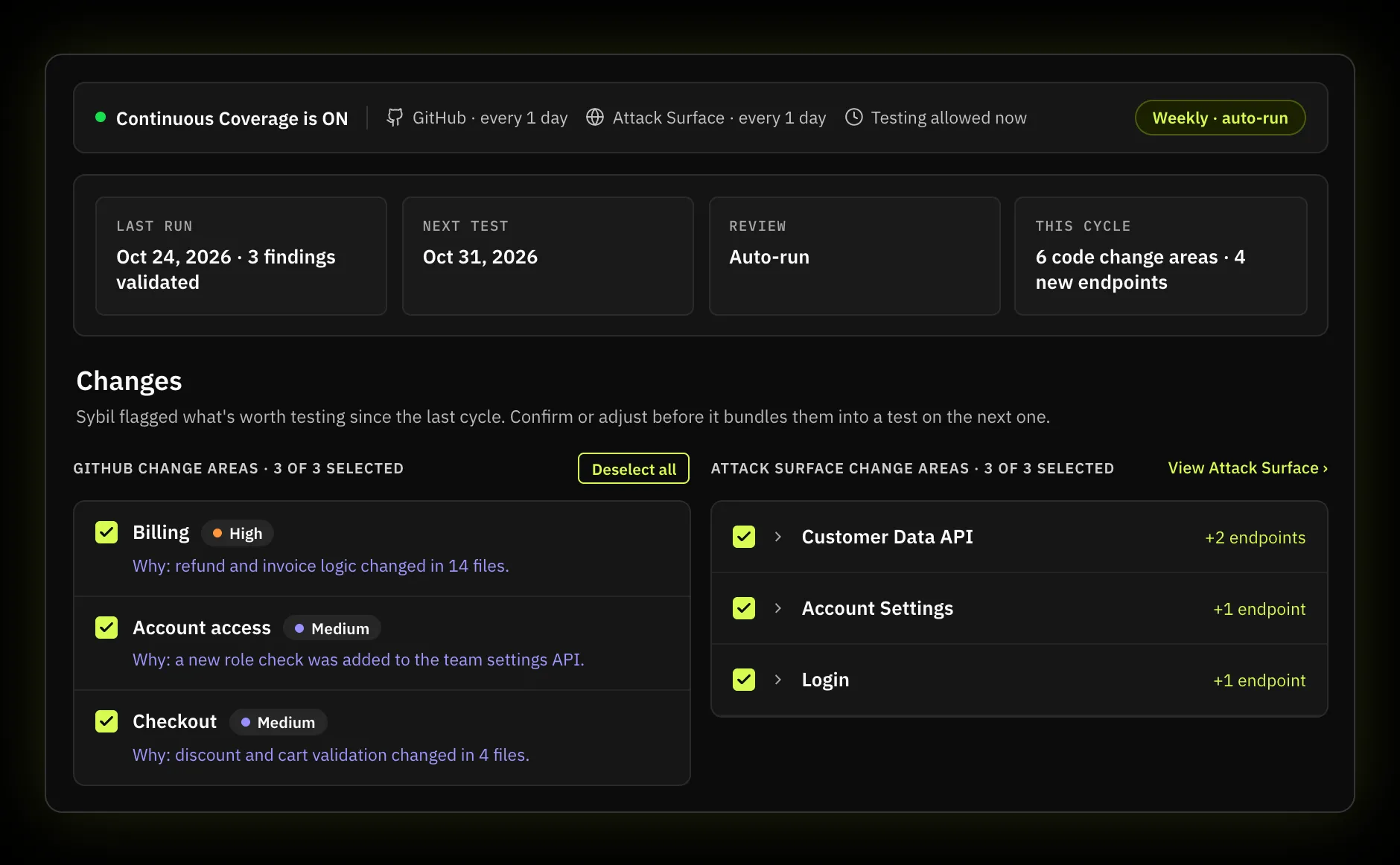
Sybil watches your code and/or your live attack surface for changes every day, then tests what changed on the schedule you set. No source code required.
No manual kickoff. No waiting for the next pentest.
See continuous testing coverage across every application.


Continuous security testing vs. the alternatives
vs. continuous scanning
vs. continuous monitoring
vs. "continuous" human services
vs. bug bounty
Why your current testing falls short

Two ways to continuously test with Sybil
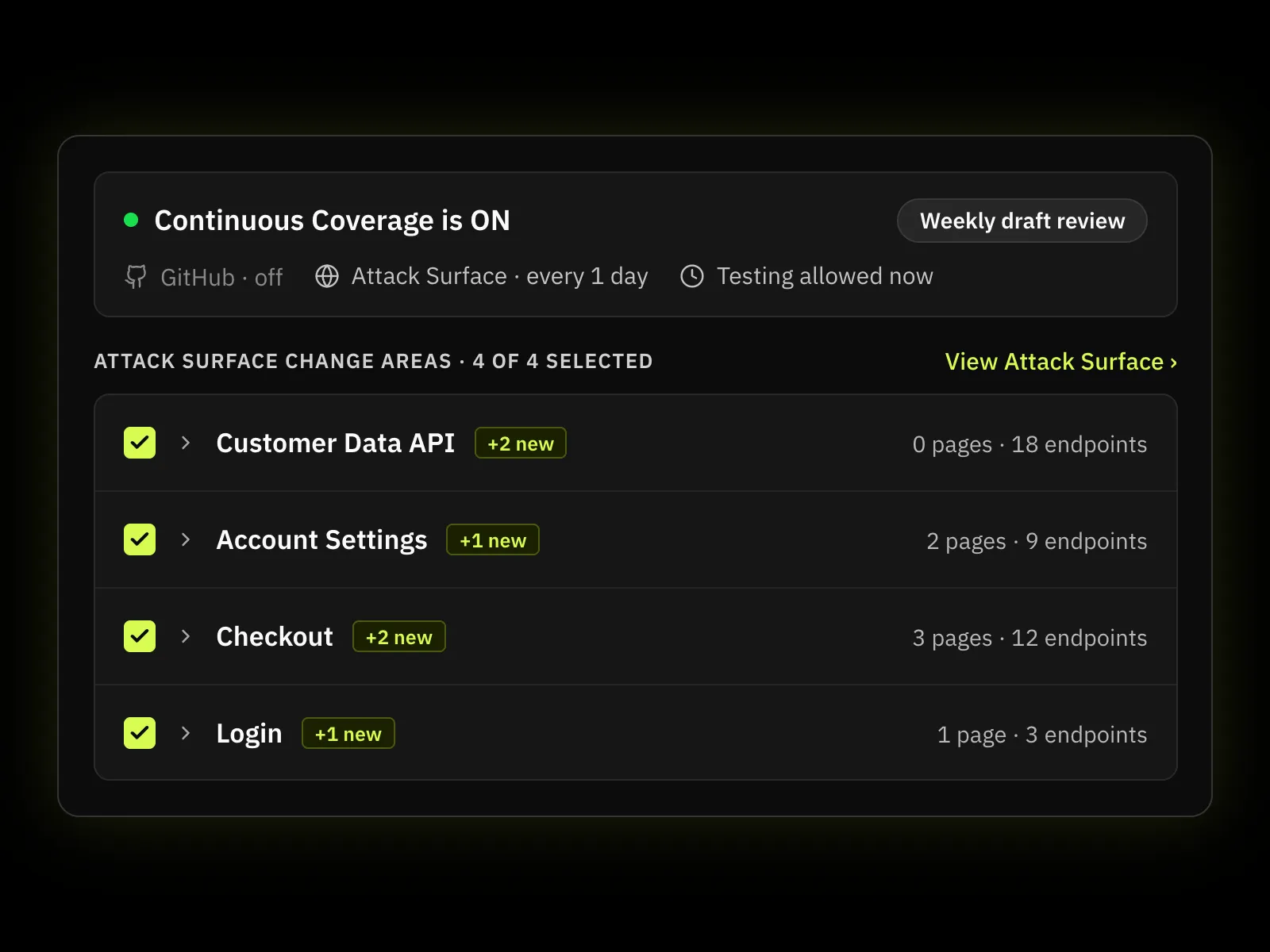
Black box: no code access needed
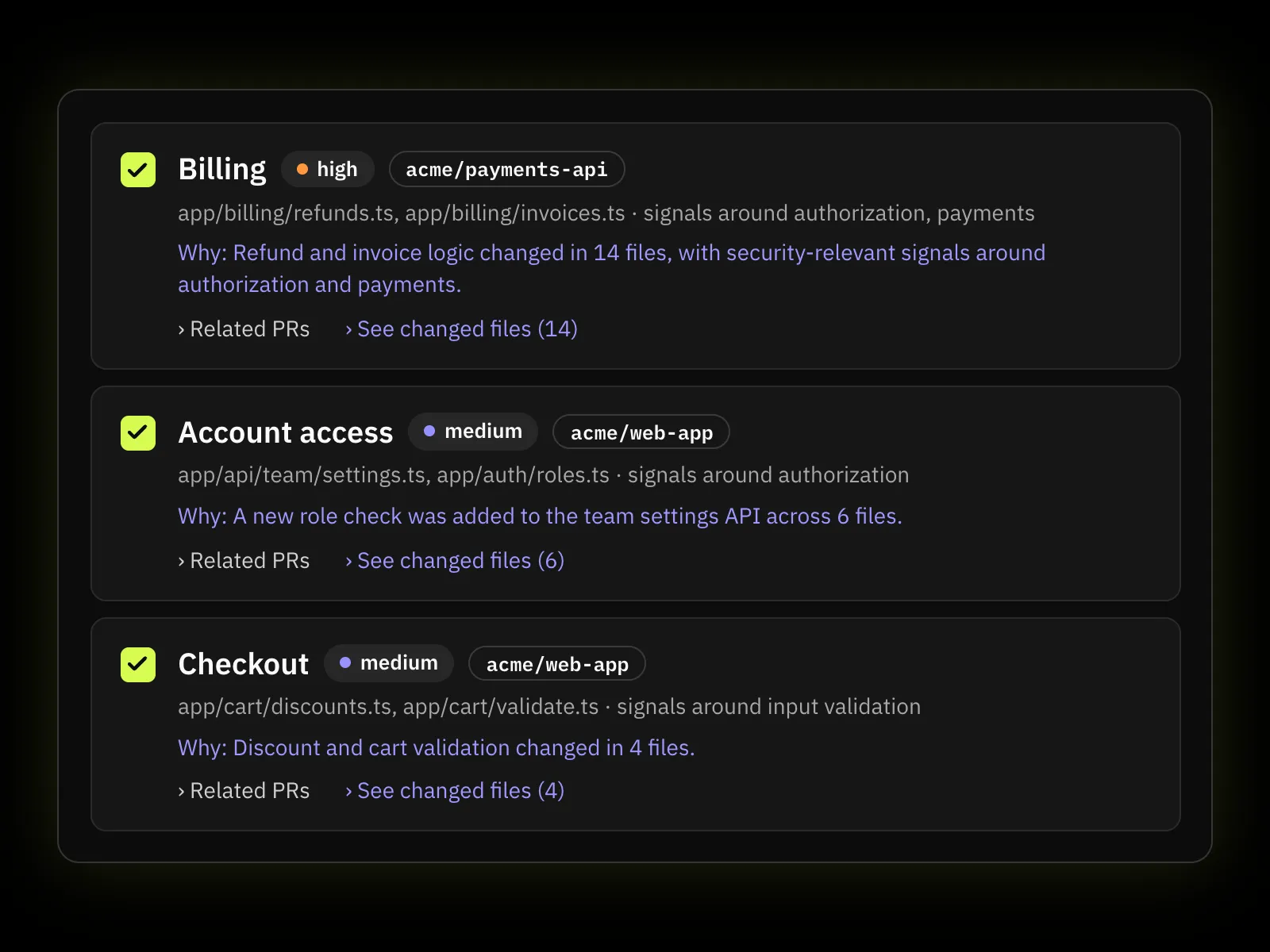
White box: connect your code

Continuous security testing with RunSybil
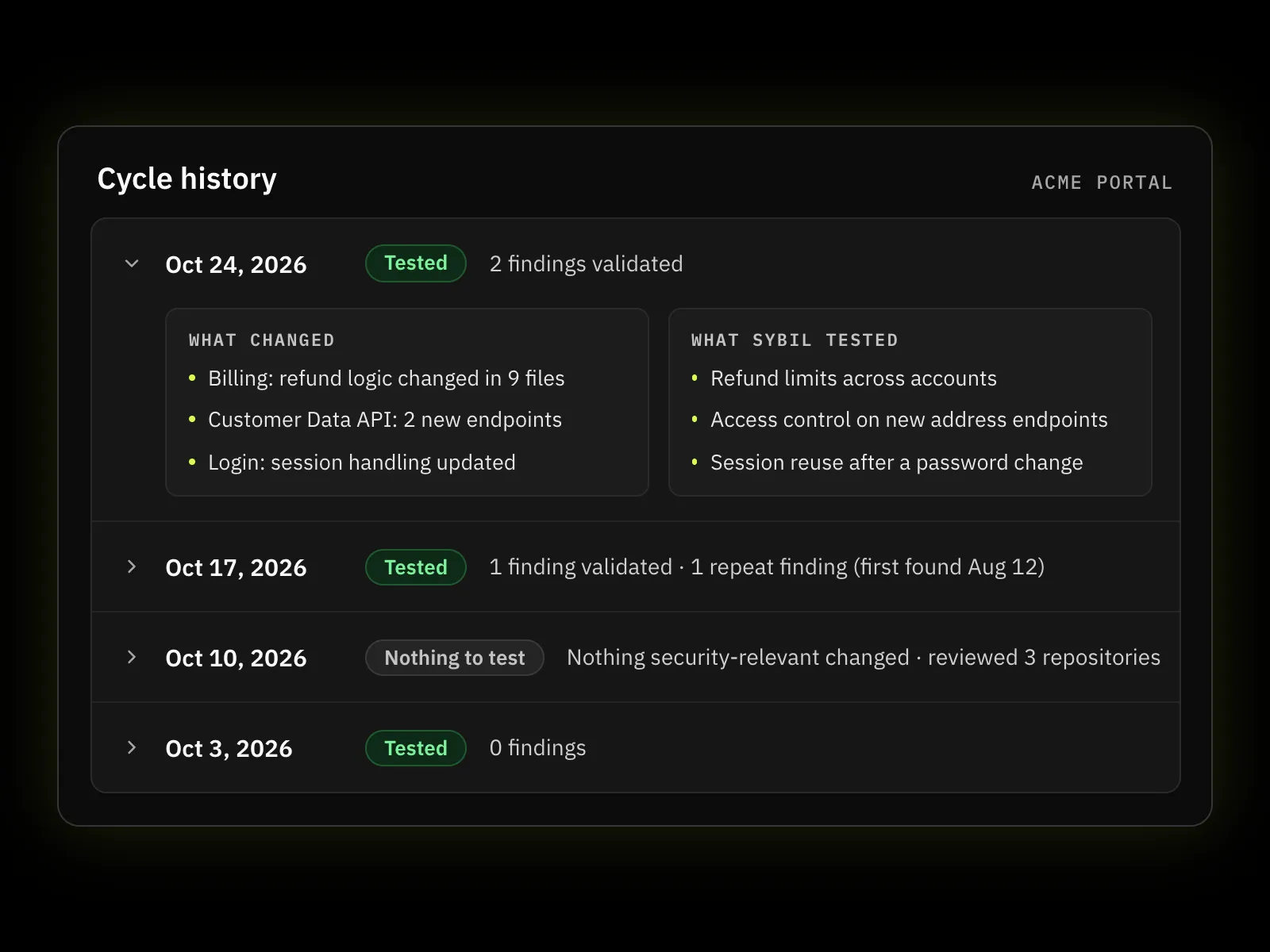
What you get every cycle:

“The real shift left is in findings becoming detection patterns powering the appsec flywheel where we push less vulnerabilities and we build confidence as there is continuous and deeper coverage of our attack surface,”
Carta is building continuous testing into its AppSec program with Sybil.
You decide where a person steps in
Frequently asked questions
What is continuous security testing?
Continuous security testing checks your applications on an ongoing basis instead of once or twice a year. Sybil watches for changes in your code and on your live attack surface as often as daily, tests what changed on the schedule you set, and validates every finding as exploitable before it reaches your team.
Is continuous security testing the same as continuous scanning or monitoring?
How is continuous security testing different from penetration testing?
A penetration test checks one version of your application at one point in time. Continuous security testing repeats that attacker-style testing on the schedule you set and focuses on what changed, so new code and new endpoints don’t wait for the next engagement. You’ll also hear this called continuous penetration testing, and Sybil validates every finding as exploitable.
Do I need to connect my source code?
No. In black box mode, Sybil re-crawls your live applications, flags new and changed endpoints, and tests them starting from just a URL. Crawl as an anonymous visitor or as any user role. Connect GitHub to add white box change testing, or use both.
Does continuous security testing replace penetration testing?
Sybil can take over recurring manual web application penetration testing and keep testing between releases. It doesn’t replace every kind of human testing, since hardware, air-gapped systems, and specialized scenarios still need people.
How often should continuous security testing run?
Sybil checks your code and live attack surface as often as daily. Tests then run weekly, monthly, or quarterly, whichever you set, with on-demand runs and testing windows available. If nothing has changed, no test is created, and the review is still logged.
Is it safe to run continuous security testing on a live application?
Testing stays inside the scope you define, and Sybil’s recommendations never widen it. By default, each test waits as a draft for your team’s approval, and you can deselect areas or exclude repos before it runs. You can also set tests to start automatically.
Is continuous security testing the same as penetration testing as a service?
No. Penetration testing as a service usually delivers human-led tests through a portal, so timing still depends on tester availability. Continuous security testing with Sybil runs on the cadence you set and on what changed, so there is nothing to schedule.