

Sybil vs Open-Source: Finding what ARTEX, Cairn, and PentAGI Miss


ARTEX and other open-source AI pentesting frameworks are everywhere right now, and our enterprise customers keep asking us the same thing, “How can we safely see what a hacker would see using these tools?” We answered in two ways.
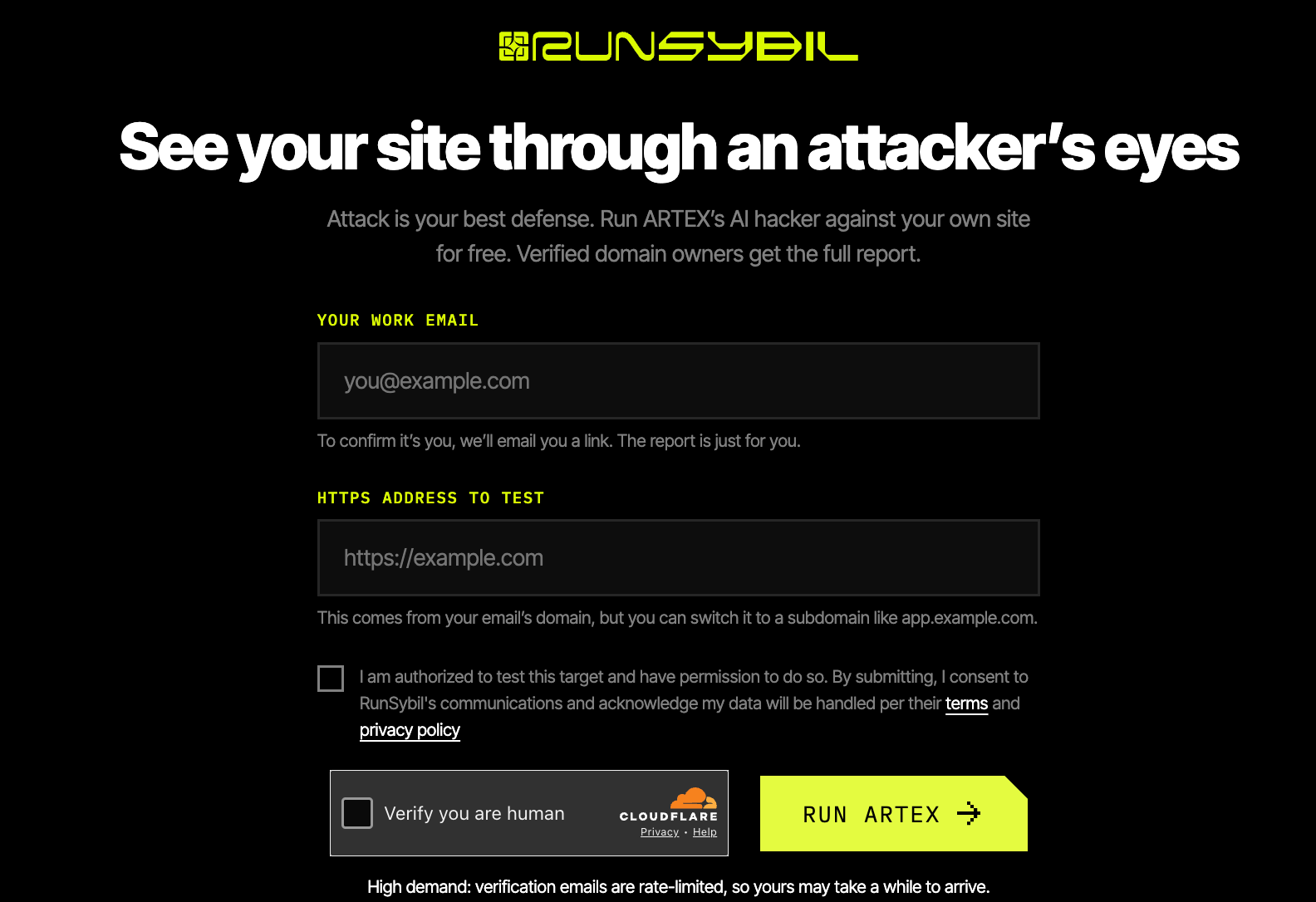
First, our engineering team built a secure, free version of ARTEX that teams can run against their own apps. Then our research team ran Sybil head-to-head against ARTEX and two similar frameworks, Cairn and PentAGI, to see how many real vulnerabilities each one finds and how much noise comes with those.
In this blog, we’ll cover what ARTEX is and why everyone’s talking about it, then walk through the experiment. We’ll close by defining AI pentesting the way our customers now use it, as continuous testing that closes the loop from finding to fixing.
But What Are These Open Source AI Pentesting Frameworks?
If you’ve been following the news this month, skip ahead to the results.
ARTEX is an open-source, multi-agent AI pentesting framework. A developer known as Autumn-27 published it on GitHub on July 26, 2026, as a tool for authorized testing. Attackers picked it up within weeks. State-aligned groups and criminal crews have since pointed it at hundreds of organizations, and Microsoft, CrowdStrike and Google have all reported attackers using it. In some cases, attackers went from an exposed password reset page or API to cloud access in less than a day.
The author took ARTEX closed-source on October 8, but it hasn’t gone away. Forks, archived copies, renamed builds and a commercial edition called ARTEX PRO are still circulating, and at least one of the Docker images in circulation was backdoored.
ARTEX isn’t the only popular framework out there. Cairn was first released on GitHub in May 2026. Unit 42 and Amazon have both documented attackers using it in real intrusions, including a China-linked group that breached 10 of the 19 organizations it targeted. PentAGI is an open-source, multi-agent penetration testing system published by VXControl.
The Experiment
The experiment setup and methods were the same as in our previous research comparing Sybil to open-source models, learn more here.
Results
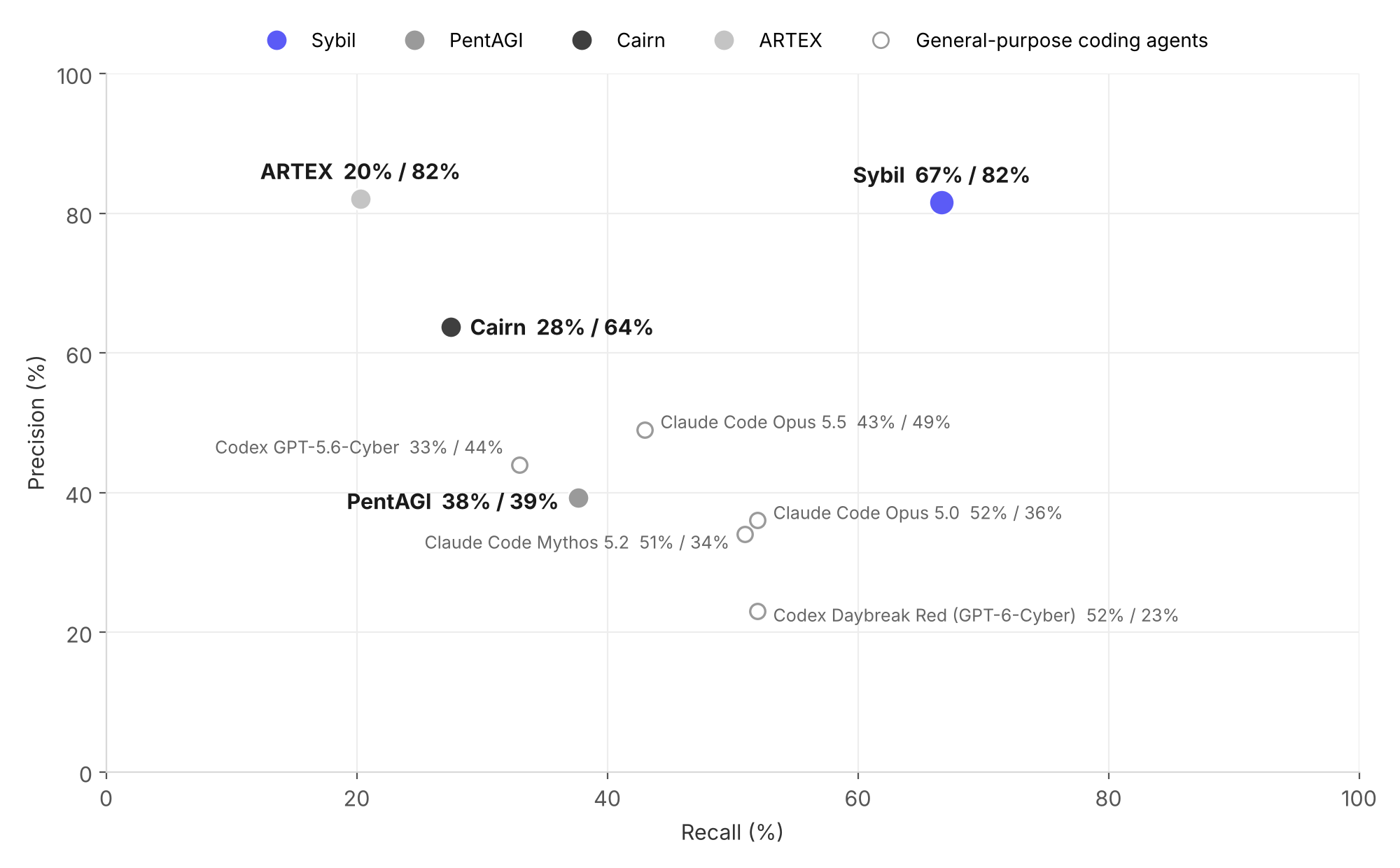
Across all three applications, Sybil reached more of the known vulnerabilities than any open-source framework, including 7 of the 8 critical ones, while also achieving the highest precision measured. Each open-source AI pentesting framework made different trade-offs for recall and precision. ARTEX matched Sybil’s precision but reached only 20% of the known vulnerabilities, while Cairn and PentAGI each found higher shares of vulnerabilities at the cost of reduced precision (28% / 64% and 38% / 39%, respectively). Sybil was the only tool that achieved high recall without sacrificing high precision, covering 1.8x-3.3x as many vulnerabilities as the open-source frameworks.
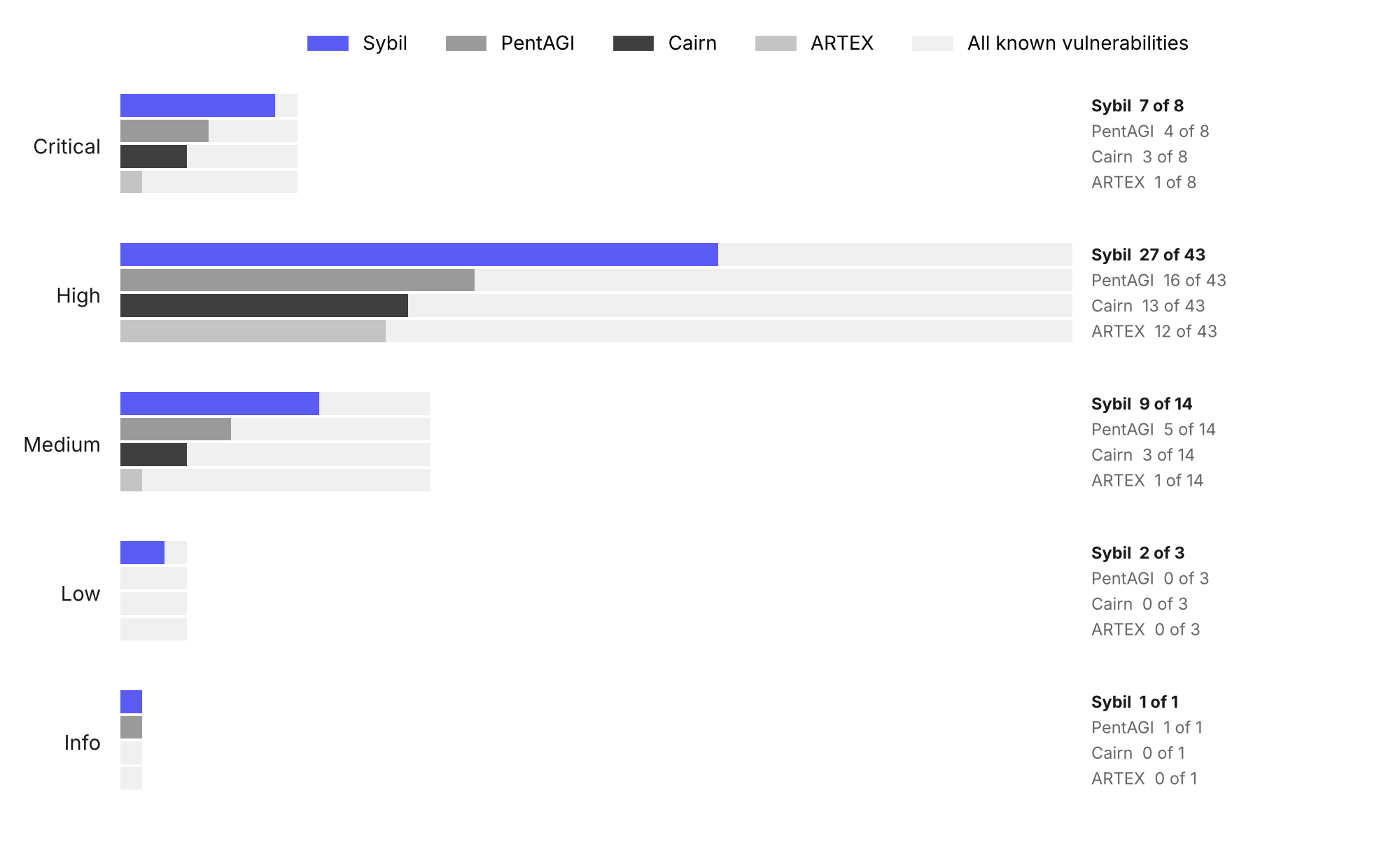
The gap was largest at the highest severity. Sybil reached 7 of the 8 critical vulnerabilities, while no open framework reached more than half. The same pattern held at high and medium severity.
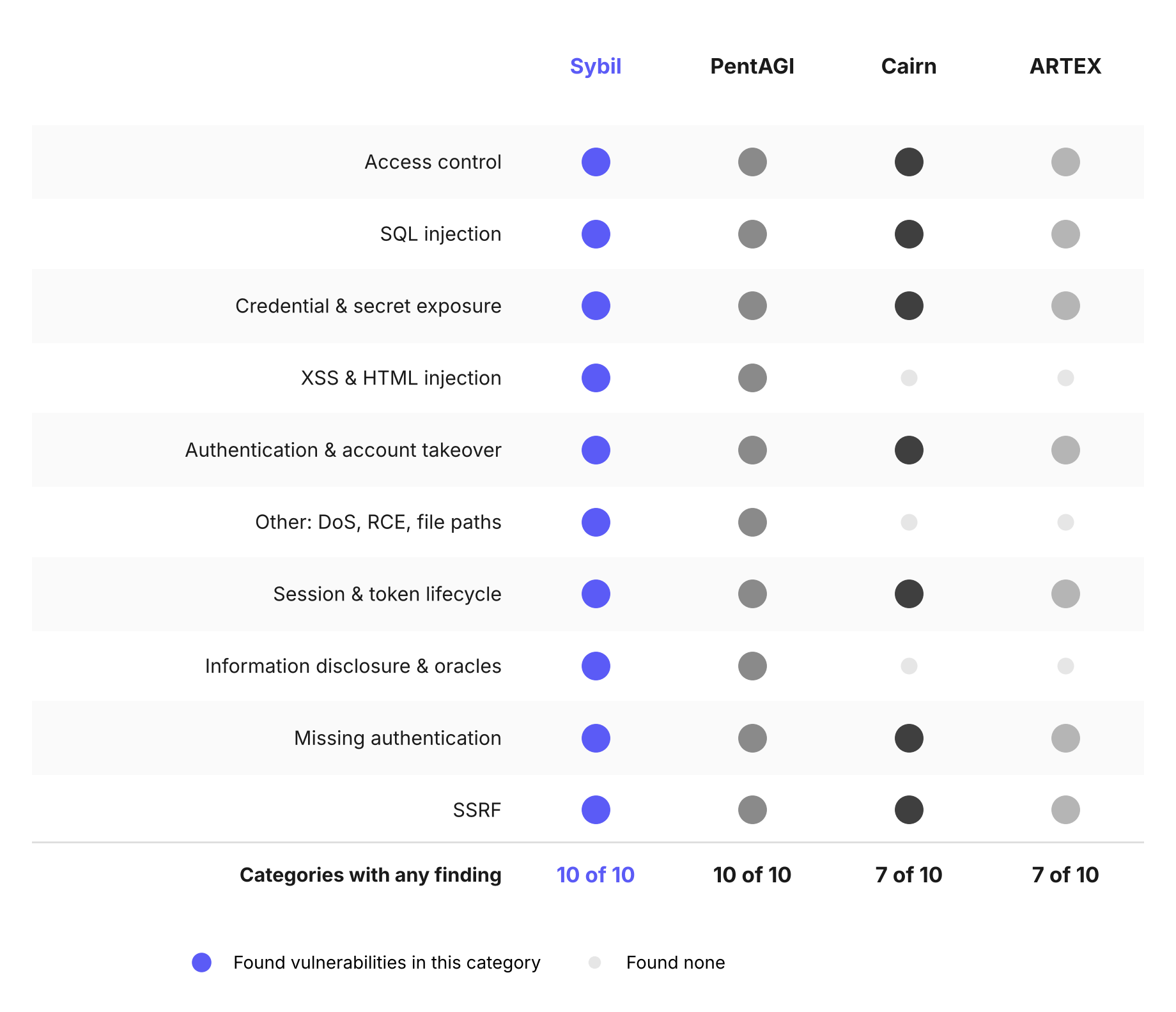
Sybil reached vulnerabilities in all 10 categories and led or tied in each. Cairn and ARTEX reached none in three categories, including XSS.
The largest gap was in access control, the bug class customers most often ask us to test for and the largest category in the benchmark. Sybil reached nearly twice as many access control vulnerabilities as the next-best tool.
Try ARTEX on Your Own App
AI Pentesting Is More Than Finding Vulnerabilities
With widely available offensive tools like ARTEX, your security program can’t afford to rely on point-in-time pentesting any more. Developers are shipping code faster than ever, and attackers are running vibe coded tools like ARTEX around the clock. Even with their apparent shortcomings, these tools can still help attackers automate discovering and exploiting serious vulnerabilities.
For offense, it doesn’t matter that these tools are imprecise; they rapid fire and only need to hit their target one time for there to be significant impact to an organization. For defense however, what matters is that the security program is comprehensive and trustworthy. That’s where these tools (and generic coding agent harnesses) fall short.
Security teams need continuous coverage that closes the loop from bugs being introduced to vulnerabilities being found to meaningfully reducing risk across the organization.
In addition to finding many more vulnerabilities at the same or better precision than open-source alternatives, Sybil keeps testing as your applications change to outpace attackers. Already ran ARTEX against your app? See how much more Sybil finds. Request a demo.

Subscribe to RunSybil Blog
A weekly newsletter covering stories, techniques, guides and the latest product innovations coming.